
From Alarms to Silences: Between the Waveform and the Held Hand
For more than three years, I worked as a cardiothoracic nurse in post-operative and critical care units in a globally recognised health city for cardiac care and high-volume surgeries. Every minute mattered, and every minute was documented. Monitor readings, ventilator settings, syringe pumps, NG feeds, urinary catheters, drain outputs, pressure lines, blood gases, fluid balance and more. The patient’s body spoke through numbers, alarms, waveforms, and machines, and I was trained to hear them all.
My documentation filled pages. Every intervention was visible. Every action is measurable. Every critical decision traceable.
People called it highly skilled nursing. They were right. Those skills kept people alive.
Then I became a palliative care nurse. And almost none of my most important work fit the documentation anymore.
I walked alone in unbearable heat, carrying home care kits from house to house to reach people who could no longer reach hospitals. I entered homes where suffering sat quietly in corners, unannounced, unnamed, waiting. I listened to fears that families had never spoken aloud to anyone. I sat beside patients who knew they were dying but did not know how to begin the conversation.
Sometimes I adjusted medicines. Sometimes I cleaned wounds. Sometimes I advocated for morphine. Sometimes I simply stayed long enough for someone to stop pretending they were not afraid.
I have hugged patients during home visits, knowing we would never meet again in this world. I have stayed beyond my hours so that someone would not have to face their final breath alone.
Everything That Never Made into the Chart
When I sat down to document those visits, I was limited by words. “Visited patient. Symptoms managed. Family counselled. Comfort measures provided.” Words that could never measure the work that had demanded everything from me.
In the ICU, I measured and monitored every micro litre of solid, liquid, and gas entering and leaving my patients. I documented the changes in the wave patterns on the monitor. I knew how to generate data. I knew how to build evidence. The machines made suffering visible in waveforms, in numbers, in alarms that demanded immediate response.
When I moved to palliative care, I realised I did not know how to document what I was doing. Not because nothing was happening but because what was happening had no form designed to hold it. Suffering in palliative care does not arrive through machines. It arrives through silence, through fear, through the way a daughter holds her mother’s hand and cannot let go.
One nursing role generated evidence every minute. The other generated human meaning that was rarely translated into measurable data.
But that does not make it less skilled.
To sit with suffering without turning away is a skill. To notice deterioration before a crisis unfolds is a skill. To hold a family together through anticipatory grief is a skill. To help someone live safely, comfortably, and with dignity until their final breath, and to know when that moment is approaching before anyone else in the room does, is a skill.
I have brought lives back. I have also helped people leave this world with dignity and without pain. Somewhere along the way, one came to be seen as success, while the other was unskilled labour or quietly mistaken for failure.
We are not just being kind. We are constantly assessing. Interpreting. Advocating. Preparing. Containing fear before it becomes a crisis. Protecting dignity when everything else has been stripped away. We are making clinical decisions in living rooms and kitchens and cramped hospital side rooms, without machines, without teams, sometimes without adequate medicines, and almost always without anyone watching.
In critical care, a machine alarmed, and I responded. In palliative care, a silence alarmed me, and I learned to respond to that too. Both required everything I had. Only one of them left a paper trail.
Perhaps palliative nursing has spent too long speaking only the language of compassion when it also needs the language of professional knowledge, clinical judgement, and expert practice. Not to become more medical but to become more visible. Not to abandon the presence, the sitting beside, the staying, but to finally build the language, the frameworks, and the evidence that allow the work to be recognised for what it truly is: complex, demanding, irreplaceable professional practice.
The things that kept people alive were not always the things we could measure. And the systems we built to capture nursing care were designed for machines, not for the held hand, the managed silence, the 3 am vigil that changed everything for a family and appeared in no dataset, anywhere.
Are We Unseen Because We Have No Language for What We Do?
I think about this often. Not as a defeat, but as a challenge. Because if the answer is yes, even partly, then the work before palliative nursing is not only clinical. It is linguistic. Theoretical. Political.
We need to describe this work with the precision it deserves. We need frameworks that capture presence as an intervention, relationship as a clinical tool, and witnessing as a professional act. We need documentation systems that make room for what actually happens between a nurse and a dying person, not just the medicines given and the symptoms scored. Still, the fear named, the family held, the dignity protected.
Because patients and families already know the difference between being managed and being valued. Between a nurse who completes a visit and a nurse who stays.
The question is whether we, as a profession, are ready to build systems worthy of that difference.
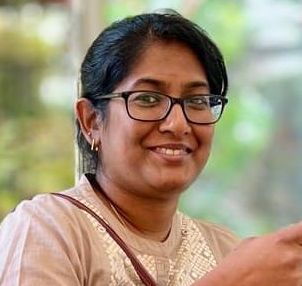
Anu Savio Thelly
Palliative care nurse actively involved with the Global Palliative Nursing Network (GPNN) and the Two Worlds Cancer Collaboration (TWCC), supporting palliative care nursing education and capacity building in low-resource settings globally.



Beautiful, heart touching write up. Attempts to vocalise the unspoken, feel the most felt during times of despair, fear, loneliness…Great job Anu.