
Lessons from Mundiapally
Integrating Palliative Care into a Secondary Care Centre in Kerala
– Deepak Varughese, Deepu Jacob and Leejia Mathew
Reflection 1
“Nanni ond, moné. Elarodum thanks parrayanay.” (Thank you, son. Please convey my gratitude to everyone.)
These are not the words one expects to hear at two in the morning, moments after the death of a loved one. Yet, they were the words spoken to me by the aging wife of the late Mr. P, a resident at our center. As I placed a hand on her shoulder and promised my prayers, I walked out of that room of grieving relatives reminded of the quiet but vital role the centre plays.
In a country where death is still widely associated with suffering, and palliation is often misunderstood as care reserved only for one’s final breaths, Mundiapally stands as a beacon. It is built on the pillars of modern palliative care: a model that is sophisticated, yet accessible to the “common folk.”
– Deepu Jacob, MBBS Intern
Reflection 2
It is 3:00 PM on a Friday. 98-year-old, Mr. K is wheeled out to the veranda. As he gazes at the blooming Gulmohar flowers in the front garden, you can almost catch a glimpse of his former self—a retired Engineer from the Indian Air Force.
Widowed and aging, Mr. K faced a risk common to Kerala’s surprisingly large “grey” population: abandonment and loneliness. While Kerala rivals many first-world countries in quality-of-life parameters, it also tops the national charts for the proportion of individuals above age 60. Not everyone is fortunate to have access to dignified care.
“Karruthamunthiri!” (Grapes!) he suddenly exclaims to a junior doctor. Due to cognitive decline, his vocabulary is now limited to just a few words. Accustomed to his demands, she lovingly offers him his favourite fruit. That night, as every night, he rests peacefully with a staff member by his bedside.
– Deepu Jacob, MBBS Intern
These stories are drawn from the reflections of medical interns posted at Believers Medical Centre at Mundiapally, a rural health centre attached to Believers Church Medical College in Kerala, India.
To understand why this centre matters, one must look at Kerala’s unique history with palliative care.
Kerala and Palliative Care
Formal Palliative Care Services began in Kerala in 1995 as a “people’s movement” in Calicut and grew into a statewide phenomenon. Through initiatives like the Neighborhood Networks in Palliative Care and the work of trailblazers like Pallium India, Institute of Palliative Medicine Calicut and many others, Kerala became a leader in the field of Palliative Care. It was the first Indian state to implement a formal Palliative Care Policy in 2008. This policy was further revised in 2019.
The defining feature of this movement has always been community leadership. Local volunteers don’t just participate; they lead the administration. It is the 1978 Declaration of Alma Ata in action: a system where “the people have a right and duty to participate in their own healthcare.” By embracing equitable distribution and community participation, the movement evolved organically from local needs. It also shares core principles with that of Primary Health Care in the true spirit of the Declaration of Alma Ata.
Bridging the Gap: A Replicable Secondary Model
Despite the success of community-led primary care, a gap remains. Palliative care within the formal medical establishment—specifically at the secondary and tertiary levels—has often been inadequate in terms of service delivery, teaching, and research.
The Medical Centre at Mundiapally is an attempt to bridge this divide. It tries to integrate Palliative Medicine, Geriatrics, Physical Medicine and Rehabilitation (PMR), and Community Medicine as much as possible by putting all of them in the same physical space.
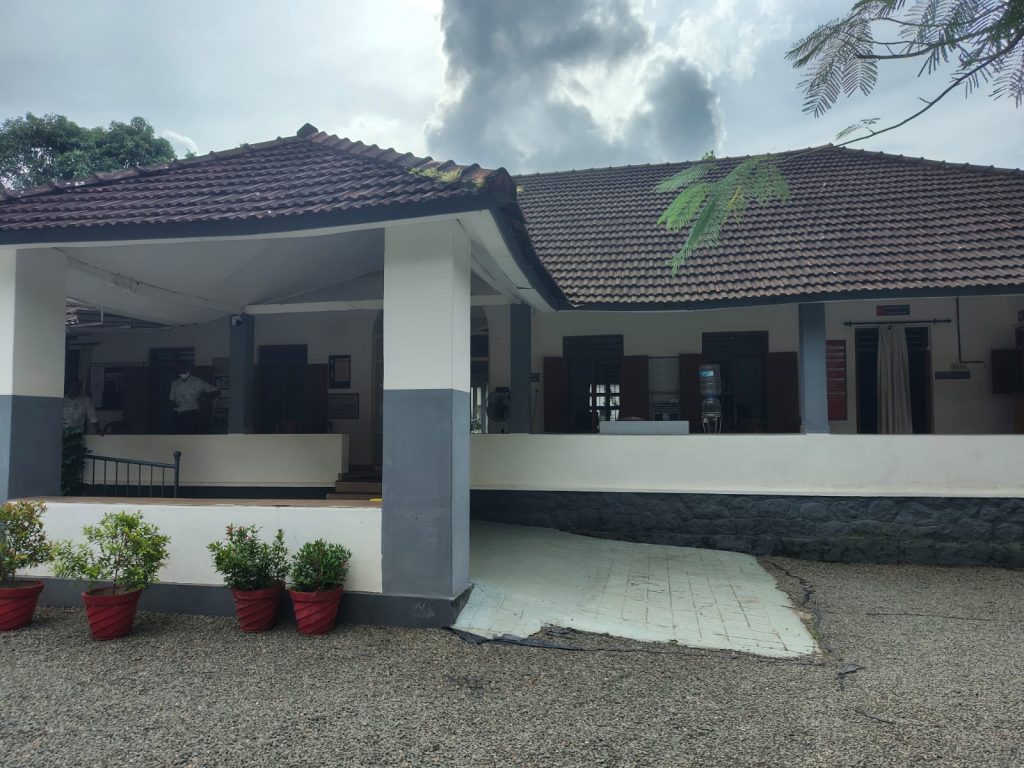
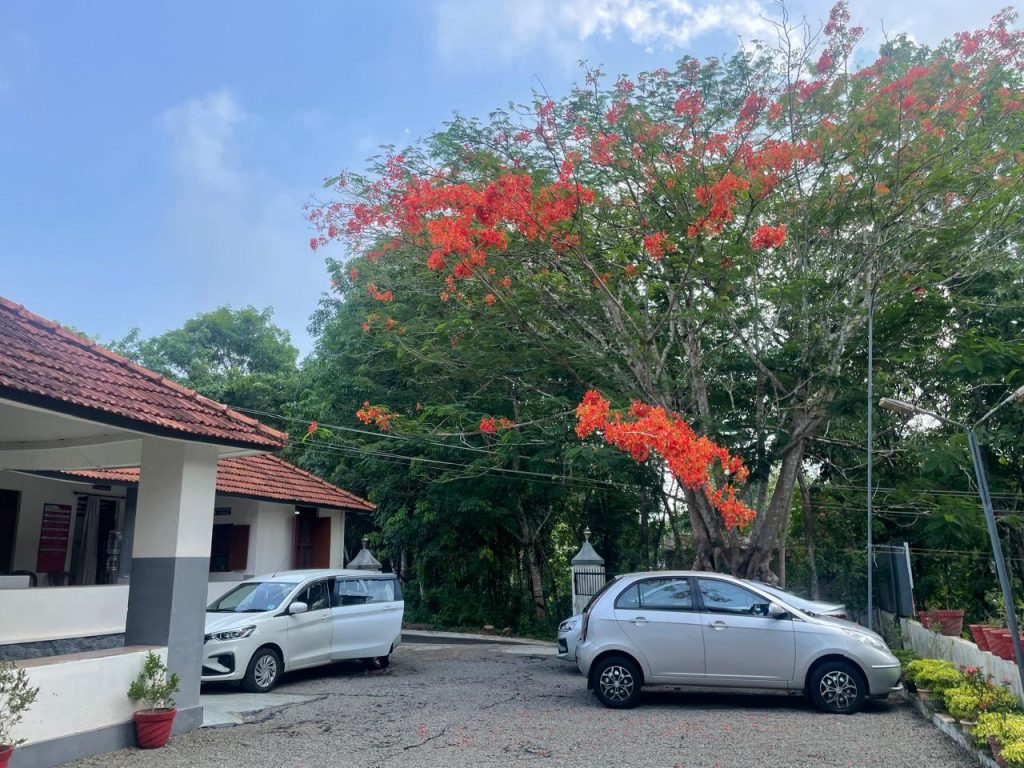
For those looking to scale secondary-level care, the Mundiapally model offers several key pillars:
- Interdisciplinary Integration: Moving beyond a single specialist, the centre provides access to a Physician, Pediatrician, Geriatrician, and Community Physicians. This is an attempt to ensure “Total Care” rather than just symptom management.
- Dignity-First Architecture: The 15 patient rooms are designed for two—one for the patient and one for the caregiver. In palliative care, the family is the unit of care; the architecture reflects that.
- Intensive Rehabilitation: A large, dedicated area for Physiotherapy and Rehabilitation is crucial for many patients. For patients recovering from stroke or managing chronic debility, palliation and rehabilitation go hand-in-hand.
- Universal Design: From washrooms with grab-bars to full wheelchair accessibility, the environment is built to maximize the patient’s remaining functional independence.
A New Priority for an Aging State
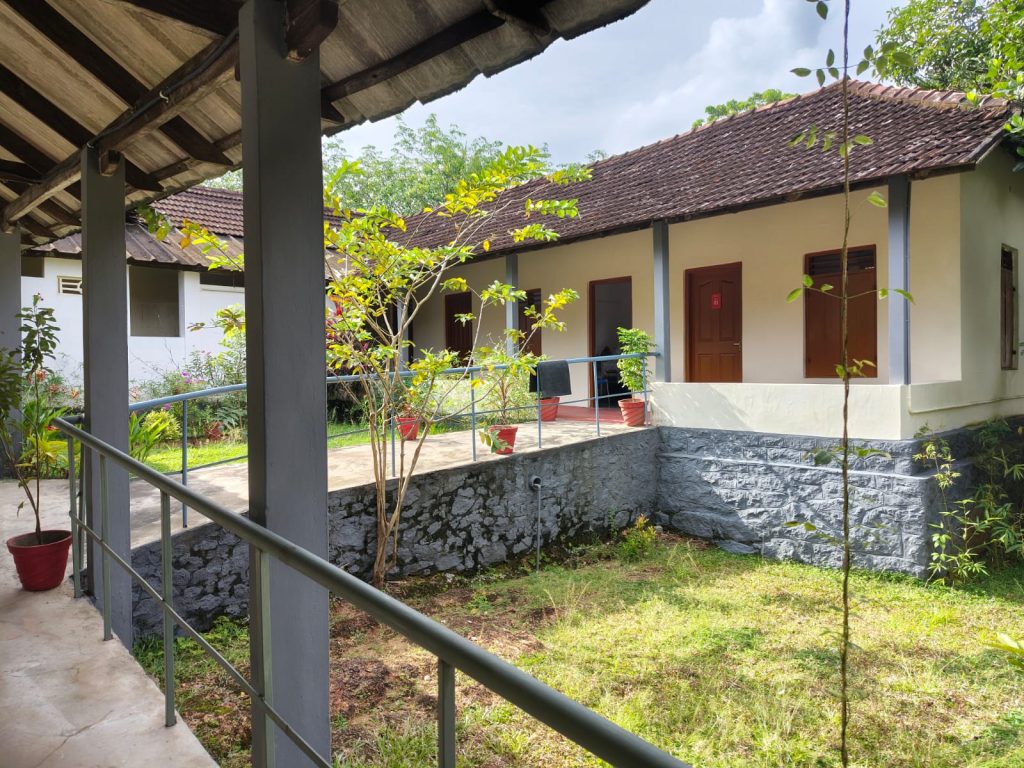
Perhaps the most significant advantage of this model is its role as a teaching center. By posting medical interns at a rural secondary centre, we expose the next generation of doctors to Geriatrics and Palliative care outside the high-pressure, often impersonal walls of a tertiary hospital.
As Kerala’s demographic shift continues, healthcare systems must evolve. The traditional secondary care focus on maternal and child health is no longer sufficient. An aging population demands a new kind of infrastructure.
Mundiapally offers a successful, replicable framework that can be implemented at tertiary medical colleges in India. There will definitely be a need to tailor services according to the needs of the population. In states with a high proportion of elderly, this could be a feasible solution.