
Maybe the Truth Is
We Don’t Lack Compassion Outside, We Lack It Within
Is compassion really disappearing from the world—or is it something quietly fading within us?
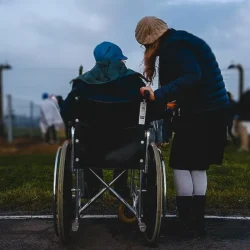
Not very long ago, I was having a conversation with a friend. He shared something simple, yet deeply moving. In his neighborhood, most residents are elderly. Their children live far away—often in different cities or countries. Yet, whenever someone needs help, people show up.
He told me about a man in his late 50s helping a 72-year-old neighbor get to the hospital during a stroke because his children were abroad. Another instance—an elderly man supporting his even older friend with meals. Small acts, quiet gestures, but full of humanity.
Around the same time, I witnessed something similar in my own life.
A close friend’s father had developed severe bedsores. Despite having a caregiver and repeated requests from the family, he resisted repositioning himself because of pain. He had recently undergone surgery after a fall—a common reality in old age—and preferred to lie still, perhaps out of fear, or perhaps because something deeper had shifted within him.
Maybe it wasn’t just physical pain. Maybe it was emotional fatigue. A quiet loss of hope. Or a feeling that his life, as he once knew it, had reached a certain closure.
He had spent his entire life working—raising four children, building stability, and finding identity in earning and providing. For him, money was not just currency; it was dignity, control, and self-worth. Even in his condition, he remained concerned about finances—ensuring money he had lent out was returned, wanting to feel secure, wanting to feel in control.
And yet, life has a way of reminding us: nothing truly belongs to us forever.
In the Bhagavad Gita, there is a simple but profound teaching:
“The wise see with equal vision a learned person, a cow, an elephant, a dog, and even one who is considered an outcast.” (5.18)
It reminds us that true awareness lies in seeing beyond status, wealth, and social identity. When we measure people by power, class, or possession, we move away from wisdom—and closer to ignorance.
And this reflection turned inward.
Am I always kind to the people closest to me?
Or do I take their love for granted?
There are moments when work pressure makes me impatient at home. I justify it. I tell myself they will understand—they are “mine,” after all. But beyond relationships, they are individuals. They deserve the same kindness, respect, and gentleness that I consciously offer to others.
Perhaps the real question is not whether the world lacks compassion.
Perhaps the question is: where do I stand within it?
Coming back to my friend’s father—when the time came to take him to the hospital, a practical challenge arose. An ambulance was arranged, but how do you carry someone who cannot move?
And then, without hesitation, two neighbors stepped in.
They came forward, supported him, and helped carry him to the ambulance. These were not people we regularly interacted with. No daily greetings. No deep bonds. Just proximity.
And yet—they were there.
That moment stayed with me.
Because it made me question something we often say: THAT THE WORLD LACKS COMPASSION.
Does it really?
Or do we fail to recognize it… or perhaps fail to practice it consistently ourselves?
We often believe kindness is rare. But maybe what is rare is consistent, selfless kindness—the kind that does not seek recognition, return, or validation.
Too often, our kindness becomes transactional. We give—but somewhere, we expect. Appreciation. Loyalty. Reciprocity. And when that doesn’t come, we withdraw. We become cautious. Guarded. Distrustful.
But is that still compassion—or is it exchange?
We live in a world where mistrust grows quickly. A few negative stories begin to define our perception of humanity. But what about the countless quiet acts of care that unfold every single day?
Human beings, at their core, are wired for connection, empathy, and care. No one goes through life without ever being kind—not even once.
The real question is:
Can we choose to be kind consistently, even when it is inconvenient, unseen, or unreturned?
Another story comes to mind.
In 2015, a man named Gagan met with a severe accident while working abroad. His car overturned, and he suffered a spinal injury. Despite surgery, physiotherapy, and significant financial investment in further treatment, he was unable to walk again.
Eventually, he accepted his reality.
Today, his family lives on a modest income. He has three children. And yet, he contributes in every way he can—cooking, helping with homework, supporting his wife. He carries a quiet faith that whatever has come into his life has a purpose, and that he will be guided through it.
He once said something that stayed with me:
“Everything will be left here in this world. There is no need to fight for anything.”
In a world driven by accumulation—of wealth, status, and validation—this perspective feels almost radical.
Maybe the purpose of life is not just to gain, but to give.
Not to control, but to connect.
Not to harden, but to soften.
We often speak about building compassionate communities. But communities are not built by systems alone—they are built by individuals. By inner work. By awareness. By intention.
Maybe the journey doesn’t begin outside.
Maybe it begins within.
Because the truth might be this:
Compassion is not absent from the world.
It exists—in neighbors who show up, in families who endure, in individuals who continue to give despite their own struggles.
But it needs to be nurtured within us—daily, consciously, and without condition.
Even when our kindness feels unnoticed or unreturned, it is never wasted. It moves quietly, spreads gently, and transforms lives—often in ways we may never see.
Like a quiet ripple.
Like a butterfly effect.
Kindness does not end where we think it does.
And maybe, just maybe, that is enough – enough to remind us each day to be kind, to be compassionate, to act with pure intention, and to surrender with faith.

Mehak Chopra
Regional Facilitator, Pallium India
(Chandigarh, Punjab, Haryana, Himachal Pradesh, Gujarat, Daman)