
The Impact of Environment on Palliative Care Practices and Needs
Palliative care is deeply connected to the environments in which people live, receive care, and experience illness. While palliative care is often understood through the lens of symptom management and quality of life, the role of the environment, i.e., physical, social, economic, and ecological, is increasingly becoming central to how palliative care is practiced and delivered.
In a developing country like India, climate change and pollution to overcrowded hospitals and inadequate living conditions, environmental factors significantly influence the needs of patients with serious illnesses and the ability of healthcare systems to care for them effectively.
Climate Change and the Growing Need for Palliative Care
Climate change is now recognised as one of the greatest public health threats globally. Rising temperatures, extreme weather events, floods, droughts, air pollution affect people living with chronic, serious, and life-limiting illnesses.
Patients requiring palliative care are among the most vulnerable during environmental crises. Many depend on:
- regular medications,
- electricity-dependent medical devices,
- oxygen support,
- mobility assistance,
- home visits,
- and uninterrupted access to healthcare services.
Disruptions caused by heatwaves, floods, cyclones, or poor air quality can rapidly worsen symptoms and increase suffering.
Research highlights that environmental instability contributes to higher disease burdens, worsening respiratory illnesses, cardiovascular disease, cancers, and mental health challenges, all of which increase the demand for palliative care services. (1)
As populations age and climate-related health risks rise, palliative care systems will increasingly need to adapt to more complex and prolonged care demands.
Pallium India’s Experience: Delivering Care Through Environmental Challenges
For organisations like Pallium India, environmental conditions are not just theoretical concerns. They are realities encountered every day while delivering home-based palliative care.
In Kerala and other regions where Pallium India works, heavy monsoons, flooding, landslides, extreme heat, and difficult terrain often directly affect access to patients. Home care teams frequently travel long distances through narrow village roads, hilly terrain, coastal regions, and remote rural communities to reach patients who are unable to travel to hospitals.
During monsoon seasons, roads may become waterlogged or inaccessible, delaying visits and affecting continuity of care. In some areas, healthcare workers have had to walk long distances carrying medicines, wound care materials, and medical supplies because vehicles could not reach patients’ homes. (2)
Environmental conditions also significantly affect patients themselves. Many patients live in homes with poor ventilation, leaking roofs, overcrowded spaces, limited sanitation, or inadequate protection from heat and rain.
For bedridden patients, such conditions can worsen infections, respiratory distress, pressure ulcers, and overall discomfort. Families already struggling emotionally and financially often face additional burdens during extreme weather conditions.
In remote areas, challenges extend beyond geography. Limited public transport, poor road connectivity, unreliable electricity, and lack of nearby medical facilities can make timely access to care extremely difficult. Patients dependent on oxygen concentrators or other medical devices become particularly vulnerable during power outages caused by storms or floods.
Yet, despite these barriers, home-based palliative care continues because the need remains urgent. Teams adapt constantly by rescheduling routes, coordinating with local volunteers, working with community networks, and using telephonic support when physical visits become temporarily impossible.
These experiences demonstrate how environmental realities directly shape palliative care delivery and why resilient, community-based systems are essential.
The Physical Environment and Quality of Care
The environment in which palliative care is delivered directly impacts the comfort, dignity, and emotional well-being of patients and families.
Factors such as overcrowded healthcare facilities, lack of privacy, poor ventilation, excessive noise, inadequate sanitation, and inaccessible infrastructure can intensify distress for people already experiencing pain, anxiety, and vulnerability.
In contrast, supportive environments that include natural light, quiet spaces, greenery, ventilation, and family-friendly settings can significantly improve emotional comfort and overall quality of life.
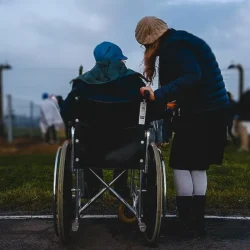
For many patients, remaining at home in a familiar environment can reduce psychological distress and help maintain autonomy, identity, and connection with loved ones. This is one reason why home-based palliative care models have become increasingly important.
Social Environment and Caregiver Burden
Palliative care does not happen in isolation. It is shaped by families, communities, housing conditions, financial realities, and social support systems.
In low-resource settings, environmental and social conditions often create additional burdens for patients and caregivers. Poor housing, overcrowding, financial insecurity, transportation barriers, and lack of caregiver support can make symptom management and home care extremely difficult.
Caregivers, particularly women, frequently shoulder the emotional, physical, and financial burden of care with very limited support. Environmental stressors such as long commutes, unsafe neighbourhoods, extreme weather, or lack of access to clean water and sanitation further complicate caregiving responsibilities.
As a result, palliative care practices increasingly need to incorporate community participation, caregiver support, psychosocial care, rehabilitation services, and stronger local healthcare networks.
Environmental Sustainability Within Palliative Care Practice
Healthcare itself has a significant environmental footprint through energy consumption, medical waste, transportation, pharmaceuticals, and resource-intensive hospital systems. The environmental impact of healthcare has become an important area of discussion globally. (3)
Palliative care offers opportunities to rethink healthcare delivery in more sustainable ways.
Community-based and home-based palliative care models may help reduce repeated hospital admissions, unnecessary investigations, long inpatient stays, and transportation-related emissions.
Telehealth services, local volunteer networks, and decentralised care systems can improve access while reducing environmental strain.
This does not mean reducing care. Rather, it means delivering care that is appropriate, person-centred, and sustainable.
The Need for Environmentally Resilient Palliative Care Systems
As environmental challenges intensify, palliative care systems must become more resilient and adaptive.
Future palliative care practices may need to include disaster preparedness for vulnerable patients, climate-sensitive healthcare planning, stronger home-care systems, sustainable healthcare infrastructure, and policies that address environmental inequities.
The intersection of environmental health and palliative care is particularly important in low- and middle-income countries, where healthcare resources are already stretched and climate vulnerability is high.
Research from the University of Sheffield also points towards the importance of integrating sustainability into palliative and end-of-life care systems to ensure long-term healthcare resilience. (4)
The environment shapes every aspect of palliative care – from the illnesses people develop, to the conditions in which they live, to the ability of healthcare systems to respond compassionately and effectively.
Palliative care today must look beyond medicine alone. It must consider the homes people live in, the communities surrounding them, the climate realities they face, and the sustainability of the systems providing care.
As environmental and healthcare challenges continue to evolve, the future of palliative care will depend not only on medical expertise, but also on building systems of care that are compassionate, community-based, environmentally conscious, and resilient.
References: