
Listening to the Community
The First Step Towards Building Compassionate Communities in Karnataka
“Communities do not need to cure disease—they need to ensure that no one faces serious illness alone.”
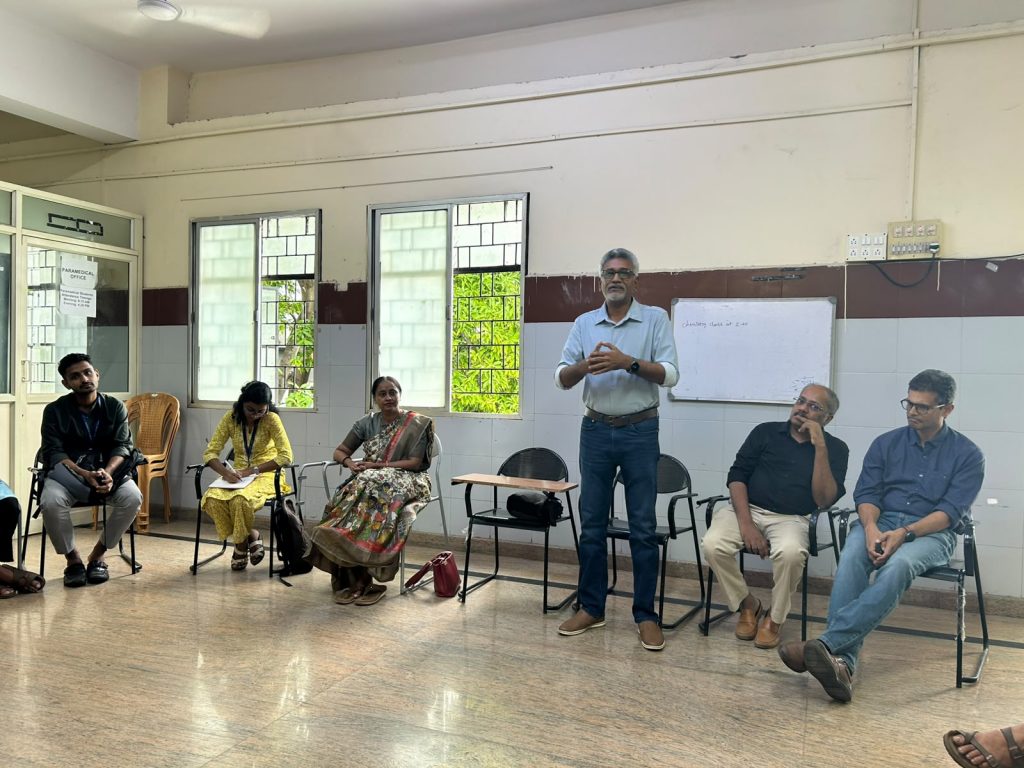
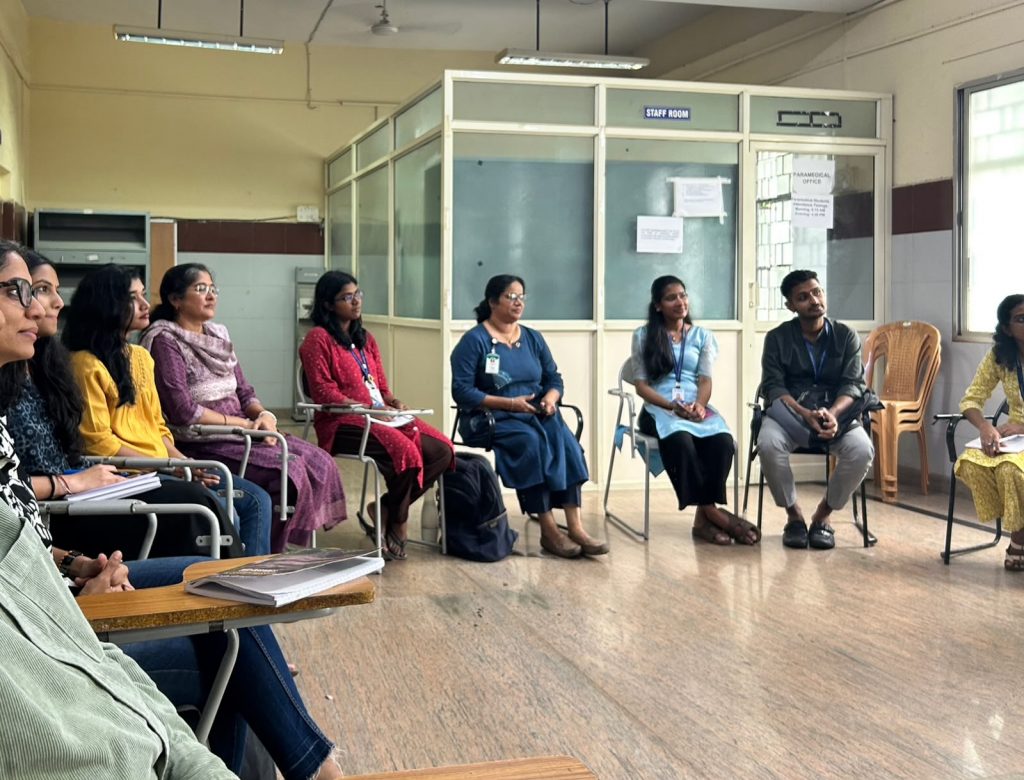
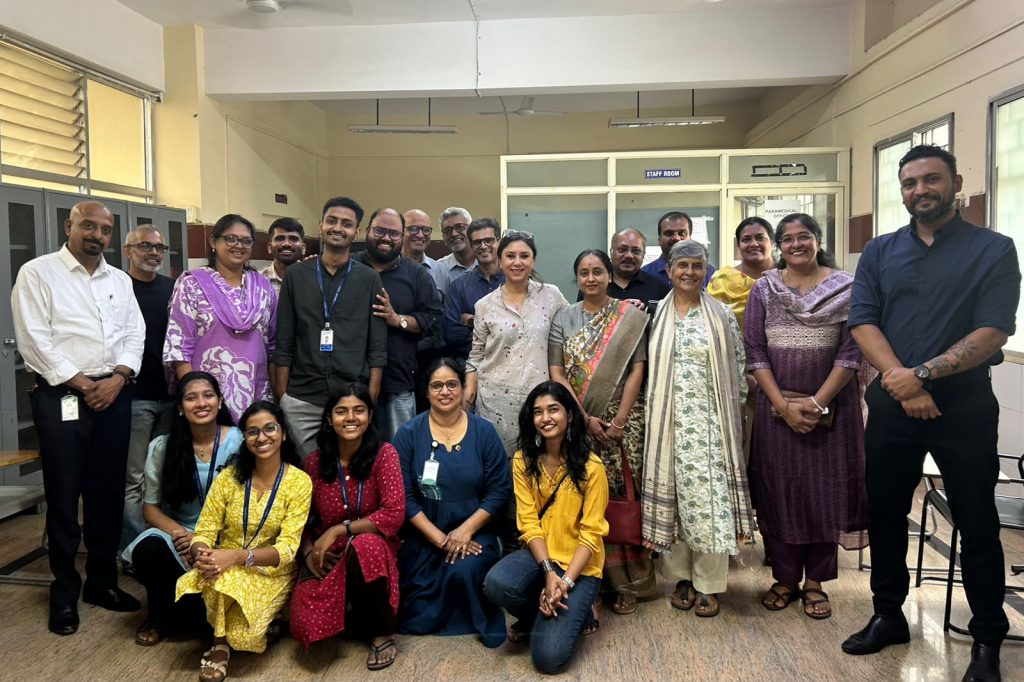
The newly established Pallium India Palliative Care Outpatient Service at Jayanagar General Hospital, Bengaluru, took an important step beyond hospital walls on 30 July 2026, by bringing together nearly 20 community representatives for an open dialogue on serious health-related suffering, caregiving, and the role communities can play in supporting people living with life-limiting illnesses.
The meeting was conceived with a simple yet ambitious vision—to build Karnataka’s first community-supported model of palliative care, inspired by the globally recognised Kerala model, where healthcare professionals, volunteers, neighbourhoods, resident welfare associations, educational institutions, and civil society collectively ensure that no person living with serious illness is left to suffer alone.
The session was led by Mr. Binod Hariharan, Chairman & CEO, Pallium India, Ms. Smriti Rana, Director – Strategic Communications, Mr. Vinod Jacob, Mission Director – Karnataka, and Dr. Arjun Devarajan, In-charge of Clinical Services – Karnataka Mission.
Beyond Healthcare: Building a Community of Care
Welcoming the participants, Mr. Binod Hariharan introduced Pallium India’s two-decade journey in transforming palliative care across India. Drawing upon the success of Kerala’s community-based palliative care movement, he spoke about the need to move beyond hospital-centred care and build compassionate neighbourhoods capable of identifying and supporting people experiencing serious health-related suffering.
He reflected on an often-overlooked reality—that healthcare expenditure remains one of the leading causes of poverty in India, and that serious illness affects not only the patient but entire families socially, emotionally and economically. Palliative care, he emphasised, is not merely about symptom management, but about creating a community of care, where healthcare providers, families, volunteers and society together become a social safety net for those in need.
As Pallium India begins services at Jayanagar General Hospital, the vision is to create a network of support within the surrounding communities, enabling early identification of vulnerable individuals and connecting them with holistic care.
What Does Palliative Care Mean to You?
Instead of beginning with presentations, Ms. Smriti Rana invited participants to share what the term palliative care meant to them.
The responses were thoughtful and deeply personal.
“End-of-life care.”
“Preserving dignity.”
“Relieving severe suffering.”
“Being present when someone needs you the most.”
These reflections soon evolved into a conversation not about healthcare systems, but about people’s lived experiences of illness, caregiving and loss.
Participants appreciated that palliative care looks beyond disease and embraces the physical, psychological, social, spiritual and existential dimensions of suffering, recognising that every person’s experience of illness extends far beyond medical treatment.
The Invisible Burden of Caregiving
One of the strongest themes to emerge was the often-unseen burden carried by caregivers.
Smt. Malliga, a public health activist from KHPT, highlighted that more than 80% of caregivers for people living with chronic illnesses are women. She spoke about how caregiving frequently becomes an unquestioned responsibility, often accompanied by guilt, sacrifice and social expectations.
Several women in the group echoed these experiences, sharing how caregiving had affected their careers, financial independence, personal aspirations and even their own health. The discussion naturally expanded into conversations around caregiver burnout, self-care, the need for respite care and the importance of supporting those who provide care every day.
The room quickly transformed from a discussion into a space where participants felt comfortable sharing deeply personal stories.
Stories That Reflected Shared Struggles
One participant, a loving daughter who had recently lost her father to cancer, shared the emotional difficulty of communicating with him during his illness. While medicines were available, she reflected on how the healthcare system rarely addressed the emotional needs of families or helped them navigate fear, uncertainty and grief.
Another participant recounted caring for her bedridden mother at home when travelling to a hospital was simply impossible. Despite living in an urban setting, finding timely medical consultation at home proved extremely difficult—a challenge that became even more apparent during the COVID-19 pandemic.
Her experience prompted an important reflection among the group:
Healthcare may sometimes be available, but for many seriously ill people it remains inaccessible because of disability, distance, financial constraints or the inability to travel.
This reinforced the importance of strengthening community-supported home-based care.
Adding another important perspective, Smt. Manimekalai, an MSW intern from Christ (Deemed to be University), shared her experiences of witnessing the challenges faced by families caring for loved ones living with schizophrenia. She spoke about the stigma surrounding mental illness, repeated hospitalisations, difficulties in ensuring treatment adherence, and the emotional exhaustion experienced by caregivers.
Participants also discussed the practical realities of caring for seriously ill family members—arranging transportation, coordinating hospital visits, procuring oxygen cylinders and concentrators, balancing employment with caregiving responsibilities, and managing the financial and emotional consequences of prolonged illness.
The discussion repeatedly highlighted that serious health-related suffering extends far beyond physical symptoms, affecting every aspect of family life.
A Story of Hope
During the discussion, I shared the story of Ajin, a young man who became quadriplegic following a spinal cord injury and at one point wished for euthanasia because he believed he had become a burden to his family.
Through rehabilitation, psychosocial support, assistive technology, volunteers, community participation and palliative care, Ajin rediscovered purpose and hope.
Today, he lives independently, works using assistive technology and inspires countless others as a motivational speaker.
His journey deeply resonated with the participants and reminded everyone that palliative care is ultimately about restoring dignity, rebuilding lives and helping people discover meaning despite illness.
Looking Beyond Hospitals
As discussions progressed, participants reflected on how communities themselves can become powerful agents of care.
Mr. Eby Oommen, an engineer by profession, spoke about the importance of ensuring the long-term sustainability of community-based palliative care initiatives. He emphasised that economics and community ownership must go hand in hand if such models are to flourish.
Mr. Jose Thomas highlighted the need to increase awareness about palliative care services within neighbourhoods. Sharing experiences from his own residents’ association, he demonstrated how organised communities can identify vulnerable families and mobilise local support for those in need.
Dr. Sonali Jadhav, Dean, M.S. Ramaiah Nursing Science and Research Centre, emphasised the urgent need for structured caregiver education and accredited caregiver training programmes. She observed that families are frequently expected to perform complex caregiving tasks without adequate preparation, making education an essential intervention for improving care while reducing caregiver stress.
Throughout the discussion, participants recognised that compassionate communities are not built solely through healthcare services but through partnerships between hospitals, families, volunteers, educational institutions, resident welfare associations and civil society.
A Movement Begins
The evening concluded with a shared commitment to continue working together in identifying and supporting people living with serious health-related suffering within the community.
More than an orientation programme, the gathering marked the beginning of a conversation between healthcare professionals and the community—a conversation rooted in compassion, partnership and shared responsibility.
As Pallium India’s services begin at Jayanagar General Hospital, this dialogue represents the first step towards creating Compassionate Communities in Karnataka, where people do not wait for suffering to reach hospitals, but recognise it early, respond together and ensure that no one has to walk the journey of serious illness alone.
“Every participant came to discuss palliative care; they left determined to become part of it.”

Dr Arjun Devarajan
In-Charge-Clinical Services
Karnataka Mission, Pallium India