
The Future of Care: Youth Leadership in Palliative Care
Palliative care in India is often seen as a growing need. However, what’s less often recognized is the role young professionals are already playing in shaping its future. Across medicine, social work, research, advocacy, and community engagement, a new generation is redefining what care means, how it is delivered, and who it is meant for.
For many young professionals, the journey into palliative care begins not with certainty, but with discomfort — with unanswered questions about suffering, dignity, and inequality. For Dr. Parth Sharma, physician, researcher, and founding editor of Nivarana, the turning point came early in his career while working in oncology and emergency medicine. Witnessing unnecessary suffering, especially during COVID, led him to confront what he refers to as “the biggest puzzle in healthcare”: why something as basic as pain relief remains so limited. Inspired by Dr. M. R. Rajagopal’s work, he discovered that palliative care and public health provide ways to tackle suffering not just at the bedside but on a systemic level. This desire to look beyond hospitals and into communities is a strong motivator among young professionals in palliative care. Dr. Parth chose community medicine because, as he puts it, “that’s where the problems lie.” In communities, the reach is wider, the realities clearer, and the impact potentially transformative. Yet he also points out one of the biggest gaps the field faces today: the lack of evidence. India still does not know how many people need palliative care, where they are located, or which care models work best across different regions. Although policies exist, implementation falls short. For him, research and storytelling must go hand in hand — numbers must be accompanied by lived realities. “When we say only 4% have access to palliative care, we don’t know anything about the lives of the remaining 96%,” he notes. Making those lives visible is where youth voices can be most powerful.
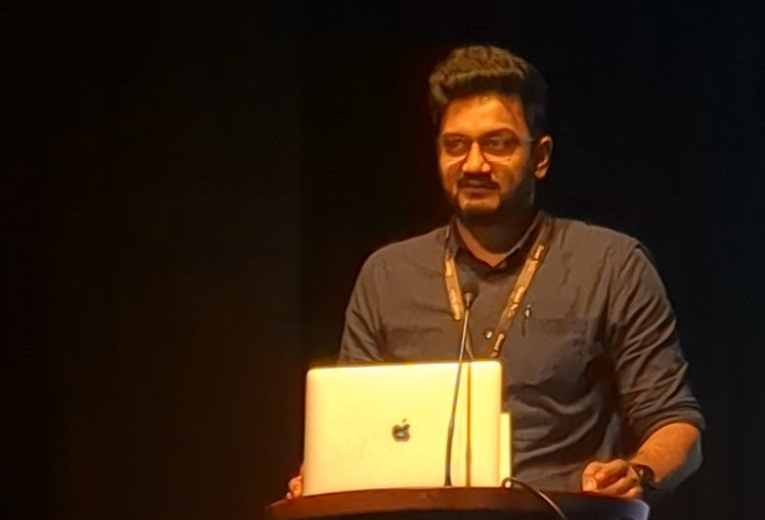
Death Literacy Festival – Good.To.Go.
That visibility is what Community Social Officer, Gokul K. Gopikrishna seeks to create while working with communities and systems. Gokul’s perspective is shaped by both his professional training and his personal experiences with chronic illness. For him, palliative care cannot be limited to clinical intervention — it must extend into social systems, local governance, and community ownership. His work in Community-Based Palliative Care (CBPC) reflects a belief that communities themselves can become caregivers when they are supported, trained, and trusted.
Much of this work is subtle and gradual. Gokul explains that advocacy rarely involves dramatic breakthroughs. It is about ongoing engagement—having sensitization meetings, following up, and building relationships with local self-governments, healthcare institutions, and volunteers. The outcomes can seem small, like a better referral pathway or improved patient identification, or a caregiver feeling less lonely. But collectively, these changes can shift how palliative care is understood — from end-of-life care to holistic, rights-based support across the illness journey.
Dr. Aakash Vijayan came into palliative care after completing his MBBS with only a vague idea of what the field entailed. One year later, he views the experience as deeply rewarding — for himself, his team, and the people they serve. He believes the evolution of palliative and geriatric care is inevitable, driven by shifts in family structures, the rise of non-communicable diseases, growing mental health challenges, and an ageing population that increasingly lives alone.
Dr. Aakash stresses something fundamental: palliative care isn’t just delivered by doctors. Roads, water supply, social infrastructure, and policy decisions all affect whether care can actually reach a patient’s home. For his generation, the opportunity lies in community work, policy advocacy, research, and innovation, including telehealth. He believes palliative care must be integrated across systems, and that young professionals — with diverse skills and collaborative mindsets — are uniquely positioned to build these connections.
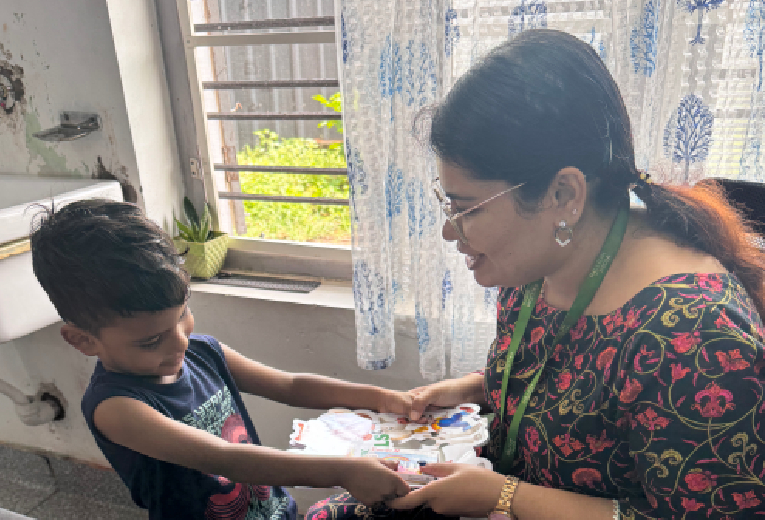
In pediatric palliative care, the human aspect of the field becomes even more apparent. Dr. Sangeetha Suresh describes palliative care as one of the most life-affirming branches of medicine — despite being widely misunderstood as “end-of-life care.” What drew her in was the space it creates to listen, to sit with fear and uncertainty, and to respond with presence rather than just prescriptions. Over time, she realized that healing isn’t always about extending life, but about making the most of the life that remains.
One family she worked with desired simple things for their child: comfort, attending school on good days, and celebrating festivals at home. It also changed her understanding of leadership. Palliative care, she says, teaches leadership without formal authority — listening deeply, advocating for dignity, working across disciplines, and standing up for patients and families even when the system resists.
Like many young doctors, Dr. Sangeetha faced discouragement. She was told palliative care was not for young professionals, that it was something ‘retired doctors’ did. Yet five and a half years later, she has never felt the urge to turn back. What began as a job became a calling. Her experience reflects a larger shift: young professionals are choosing palliative care not because it is easy or prestigious, but because it aligns with their values.
A common thread emerges across these voices — collaboration. Dr. Parth talks about a generation with little ego and a strong willingness to work together. Gokul highlights solidarity between communities and institutions. Dr. Aakash stresses the importance of interdisciplinary and intersectoral work. Dr. Sangeetha speaks about teamwork that prioritises what matters most to patients. This collaborative spirit provides hope.
Youth leadership in palliative care is not about replacing pioneers but building on their foundations with new tools — research, storytelling, digital platforms, policy engagement, and social media. It is about persistence, maturity, and humility without losing oneself. Most of all, it is about redefining success in healthcare — not as cure alone, but as dignity, access, and freedom from unnecessary suffering. The future of care, as these young professionals show us, is already taking shape. And it is compassionate, community-focused, and deeply human.
Credits:
Dr. Parth Sharma: Physician, Researcher, Writer
Gokul K. Gopikrishna: Trainee Social Officer, Community, Pallium India
Dr. Sangeetha Suresh: Pediatric Palliative Care In-charge & Nodal Officer – Palliative Care, SAT, Pallium India
Dr. Aakash Vijayan: Jr. Palliative Care Physician, Pallium India