

Strengthening Opioid Availability for Palliative Care in Uttarakhand
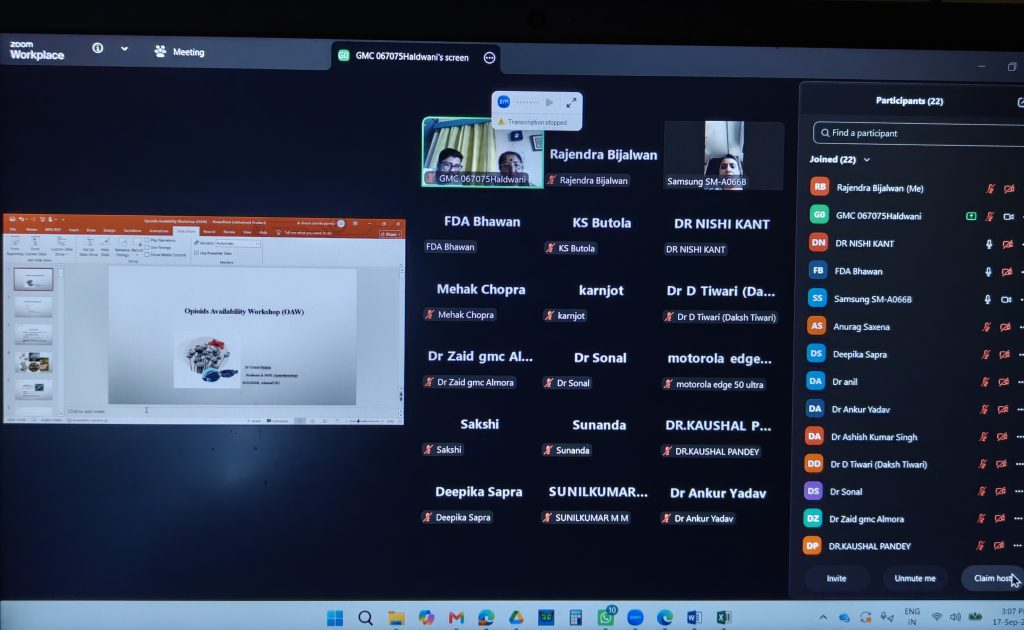
Pallium India conducted an Online Opioid Availability Workshop (OAW) for Uttarakhand on 17 September 2026, bringing together around 39 doctors and healthcare professionals who participated individually and through different medical college and institutional groups. The workshop also saw participation from the Uttarakhand FDA/Drug Control team, including Mr. Sudhir Surya, Assistant Drug Controller, and his team members.
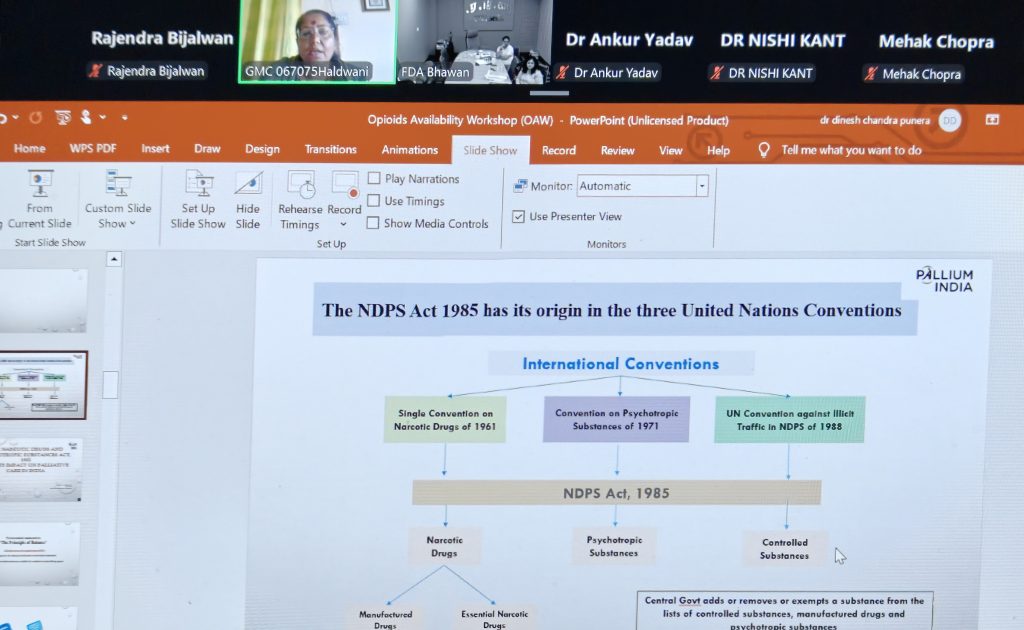
The session was led by Dr. Urmila Palaria, Professor and HOD, Anaesthesiology, SSJGIMSR, Almora, who participated as a Pallium India representative and speaker. Her presentation covered the importance of opioid availability for pain relief, palliative care and cancer care, with a focus on balancing access to essential medicines with appropriate safeguards against misuse and diversion.
A significant part of the session focused on Essential Narcotic Drugs (ENDs), Recognised Medical Institutions (RMIs), and the practical requirements for procurement, storage, dispensing and documentation of opioids. The discussion also highlighted the importance of translating the existing regulatory framework into actual patient access.
The interactive session brought forward several practical questions from participants. One participant from Almora asked whether a list of nearby RMIs could be made available for patients who travel from neighbouring districts such as Tehri, Champawat and Bageshwar and require morphine or other opioids. The FDA team informed participants that an RMI list is available and can be provided. Such information could help healthcare providers guide patients to appropriate centres and strengthen continuity of care across districts.
Another participant raised a question regarding the emerging use of medical cannabis/cannabinoids in pain and palliative care. The discussion acknowledged ongoing international research while highlighting that cannabinoids are not part of the Essential Narcotic Drugs framework discussed in the workshop and that evidence regarding their effectiveness in pain management is not yet conclusive.
In his concluding remarks, Dr. Sunil Kumar, MM, Pallium India, emphasised that while research into newer therapies continues, the immediate priority remains ensuring access to established essential medicines such as morphine for patients who require them. He highlighted that implementation gaps can still prevent patients with severe cancer pain and other conditions from accessing morphine despite the simplified regulatory framework.
The workshop reinforced an important message: opioid availability is not only about regulatory permission or institutional stocking; it is ultimately about whether a patient experiencing severe pain can actually access the medicine they need.
The session provided a valuable platform for dialogue between healthcare professionals, the Drug Control authorities and palliative care stakeholders, highlighting the importance of continued collaboration to strengthen appropriate opioid access across Uttarakhand.

Rajendra Dutt Bijalwan
Regional Facilitator, Pallium India – Uttarakhand, UP, Bihar, Jharkhand




Leave a Reply