
Parallel Universes: Love, Labor, and a Fairer Way to Care
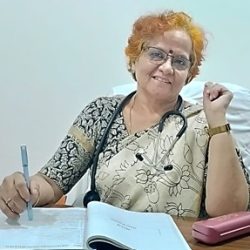
Thanks to no efforts on my part, I grew up in a home where feminism was not an argument. My mother, formidable in her own field, has spent her life pushing change, despite and against the patriarchy in India. My father’s work was rooted in children’s rights, especially girls’ rights, against labor and abuse. No one asked when I would get married. No one tested my worth by my cooking. (My skills remain rudimentary, are now propped up by the privilege of a spouse who cooks like a MasterChef contestant.)
I had buffers against structural violence: secure food, good schools, museums, books, many, many of them, and then some more books. Later, I gained the ability to move, between India and the United States. Now being a multi-local, I am grateful for the privilege to be allowed to call multiple places, and people ‘home’. In my hopes to bridge healthcare knowledge translation across contexts. I carry an acute awareness of my privilege, often to a fault.
And yet, across geographies and income gradients, one common thread has been impossible to witness in contrast to my own narrative thus far – the burden of care still settles quietly, onto girls’ and women’s hands.
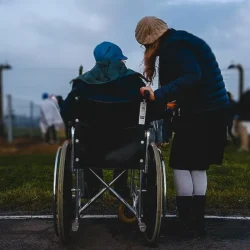
This winter afternoon in Gorakhpur, Uttar Pradesh, India, sitting on a verandah with the warm winter sun against our sweaters, my grandmother looked at her palms commenting ‘in hatho ne bohut dekha hai’, these hands have seen and held a lot. She was educated, master’s degree in sociology, early exposure to the UK, an accomplished embroiderer, a Hindi aficionado, radio commentator, a typist, a chef, and much more. But her early years, forgoing certain career opportunities, a dominant role became caregiving for her mother-in-law: bathing, cleaning, feeding, nurturing. It wasn’t framed as a choice. It was an expectation, explicit and implicit, absorbed into the family’s moral order.
It is tempting to attribute this to another time, and generational differences. However, the pattern recurs. When I was twelve, I accompanied my father to one of his drop-in centers near the Nizamuddin railway station in Delhi. A cacophony of red bruised shirted coolies, smoke, shouting, prayers, platforms, and hunger, the grave kind. At the haven of the center, I met a girl my age, twelve, same height as me, wearing the same shade of blue as me, my shirt, her salwar, both of us however living in parallel universes. We made small talk. I asked what she wanted to become when she grew up. A wife. A caretaker, I take care of my dadi (grandmother).
She had seen her mother do it; she had been told it was her responsibility. She did not go to school. The drop-in center existed to push children like her back to school, back into possibility.
She spoke with calm stoicism, repeating something she had clearly heard before: “Education is bad, college is dangerous, that’s where scandals occur.” My twelve-year-old flustered self tried to negotiate with the only tools I had, logic shaped by my own sheltered world. What if education helped you earn, help your family? What if it helped you marry “better”? (If that mattered?)
She shook her head. College was bad. Parties. No-gooders. College is not good, school is not good. Sure, I wasn’t a fan of school. Yet, I still remember the knot in my stomach, because what I was hearing was not just one girl’s opinion. It was a boundary being drawn around her life that she had accepted as the norm. I have come to see caregiving as one of the quietest forces that helps draw those boundaries, especially for women.
————–
However, this disparity is pervasive, whether in inner city Baltimore, or the streets of Bombay. During fellowship at a clinic in Baltimore, in the ‘Global North’, I followed a grandmother from Guyana who cared for her ventilator-dependent granddaughter who developmentally was unable to communicate. She cared brilliantly, tenderly, with intimate expertise. We bonded over Indian traces in Guyanese culture and cuisine. Though more so her beaming over the small gesticulations of joy her granddaughter G revealed, the way she narrated meaning into ordinary days, and similar for the extraordinary joys – like the Taylor Swift concert she took her for. She held a pulse knowing everything about her granddaughter, what each facial movement or side eye meant, how agitation signaled, messages that rhythms of bowels and skin carried, what silence concealed.
I practice Pulmonary and Critical Care Medicine; I encounter families often in their darkest times. Those who have been primary caregivers for their children with genetic or congenital alterations for decades, maintaining lifelong ventilatory support to maintain their children’s breaths. They become their strongest advocates, fluent in a language most clinicians only hear in fragments: body language as symptom report.
I have also seen the cost of missing that language. A bedbound patient, unable to communicate, cried out in pain for hours. It was initially interpreted as a part of his syndrome. Later a catastrophic physical cause was ascertained, he died. He was a ward of the state. Caregiving relegated to a corporatized system – supports who clock in, and out, limited continuity, fragmented, rushed, and emotionally hollow. I cannot claim a family caregiver would have prevented his death, medicine is rarely so clean. However, patients who cannot speak and need caregiving, need interpreters, and family caregivers are often the most skilled interpreters we have.
————–
Globally, women perform 76.2% of all hours spent on unpaid care work. That work totals an estimated 16.4 billion hours every day worldwide and, if valued at minimum wage, is roughly worth US$11 trillion, or 9% of global GDP (1). It is about lost choices and freedom, just as much as economic loss: time that could have gone into schooling, paid work, rest, political participation, creative life, or simply health.
Care is love, yes. Care is also labor.
However, the solution in other contexts, when care is delivered through profit-driven institutions, quality can suffer. A systematic review of nursing home ownership in the United States found that for-profit nursing homes often show better financial performance but worse outcomes for staff well-being and client well-being compared with not-for-profit facilities. (2)
So, we have two issues here: on one end family, especially women labor is free, and sacrificial. Though is effective and caring. Yet, on the other end institutionalization and corporatization of care does not translate to thoughtful care or outcomes.
Where do we go from here?
From my stance, while open to debate, a workable middle path needs deliberate system design: treat care as labor, professionalize home-based support while protecting continuity through stable teams that accumulate relational knowledge. Guarantee respite as a right, funded proactively along serious illness trajectories, and finance caregiving without trapping women (and men) – allowances, pension credits, and employment protection paired with explicit strategies to increase men’s caregiving, so the net effect is redistribution, not formalized confinement. Clinically, embed family caregivers as part of the care team via a portable ‘care narratives or comfort cues’ notes that travels across home, ward, ICU, and hospice.
We need a world where essential care is neither abandoned to ‘the family’ nor outsourced to a cold market. Though somewhere in the middle, understanding who is carrying the care, and what would it take to share it fairly?
References
- International Labour Office. Decent work and the care economy. Geneva: ILO; 2024. (Report VI, International Labour Conference, 112th Session). Available from: https://www.ilo.org/sites/default/files/wcmsp5/groups/public/%40ed_norm/%40relconf/documents/meetingdocument/wcms_921863.pdf[Accessed 2024 May 22].
- Bos A, Boselie P, Trappenburg M. Financial performance, employee well-being, and client well-being in for-profit and not-for-profit nursing homes: a systematic review. Health Care Manag Rev. 2017;42(4):352–368. doi:10.1097/HMR.0000000000000121.
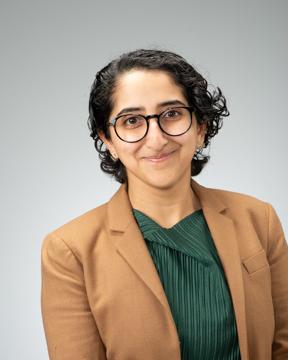
Bhavna Seth, MD, MHS, is an Assistant Professor of Medicine in the Division of Pulmonary, Allergy, and Critical Care Medicine at the University of Pittsburgh, where she also serves as the Director of Global Health. Clinically, she specializes and splits her time between the Intensive care unit and Interstitial Lung Diseases at the Simmons Center for Interstitial Lung Disease.
A graduate of Lady Hardinge Medical College in New Delhi, she pursued her residency in Internal Medicine at Boston University Medical Center, part of the Medical Education pathway, working in inner-city Boston with a diverse safety-net population. She earned a Master of Health Sciences from the Johns Hopkins Bloomberg School of Public Health and completed her fellowship in Pulmonary and Critical Care Medicine at the Johns Hopkins Hospital. Dr. Seth has lived and worked in several resource-variable settings across rural India, Vietnam, Kenya, Ethiopia, and in Botswana, the latter during her Global Health Fellowship at Beth Israel Deaconess Medical Center, Harvard.
Utilizing implementation research and qualitative methods. She is interested in working on intractable problems in public health, implementation of evidence-based, culturally competent care for resource-varied and underserved communities, particularly for acute care and palliative care systems.