
Strengthening Social Work for Regional Transformation
Reflections from the Northeast Social Work Conclave 2026
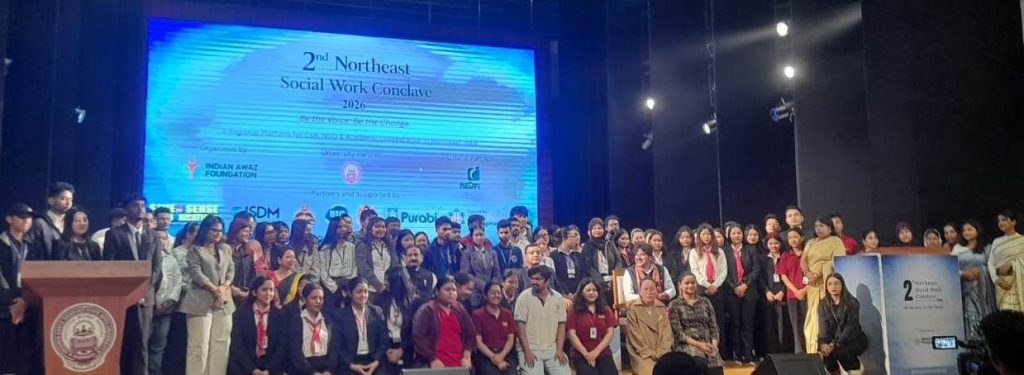
On 7th February 2026, the second Northeast Social Work Conclave was held at Krishna Kanta Handiqui State Open University (KKHSOU), Guwahati, organised by the Indian Awaz Foundation under the leadership of its Founder and Managing Director, Mr Md. Nazim Ahmed. The Conclave brought together academics, practitioners, NGOs, and students to deliberate on the evolving role of social work in shaping community development and regional transformation in Northeast India.
Key Highlights
- Universities as catalysts: The inaugural address emphasised the responsibility of higher education institutions in advancing social work education, fostering community engagement, and driving knowledge-based development.
- Career pathways in social work: Panelists explored opportunities for professional social workers in child protection, law, and social justice systems, highlighting the ethical responsibilities and institutional roles that underpin these fields.
- Journey of a development professional: A keynote session offered a reflective account of professional growth, grassroots experiences, and leadership in the development sector – an inspiring narrative for young social workers.
- Digital technology in social work: Discussions underscored how digital tools can expand outreach, improve service delivery, and strengthen advocacy.
- Youth engagement: Interactive activities encouraged students to envision their role in shaping social change.
- Innovation and collaboration: Sessions on NGO-CSR partnerships, scalability of impact, and emerging development practices showcased models for sustainable collaboration.
- Showcasing NGO work: Several organisations presented their initiatives, impact areas, and partnership opportunities.
Connecting Social Work to Palliative Care
Social workers are indispensable in palliative care-bridging medical systems with communities, advocating for patient rights, and ensuring holistic support for families. Just as the Conclave highlighted career pathways in child protection and justice, palliative care too demands professional social workers who can:
- Navigate complex health systems and policies.
- Provide psychosocial support to patients and caregivers.
- Advocate for equitable access to essential medicines and services.
- Facilitate community-based care models that honour dignity and compassion.
The emphasis on digital technology and NGO-CSR collaboration also aligns with Pallium India’s ongoing efforts to innovate service delivery and build sustainable partnerships. Social workers, with their grounding in empathy and systemic thinking, are uniquely positioned to operationalise these innovations in the field.
Why This Matters for the Northeast
The Northeast region faces unique challenges, including geographic isolation, limited healthcare infrastructure, and diverse cultural contexts. Platforms like the Conclave are vital for showcasing good practices, fostering dialogue, and inspiring collective action. For palliative care, this means:
- Building awareness among youth and universities about the importance of compassionate care.
- Strengthening collaborations with NGOs and state institutions to integrate palliative care into broader social development agendas.
- Empowering social workers to become advocates for dignity in health and life.
Closing Reflection
The Northeast Social Work Conclave 2026 was more than an event – it was a reminder that social work is at the heart of sustainable development. It reinforces the belief that social workers are the backbone of palliative care, ensuring that compassion, justice, and dignity are not abstract ideals but lived realities for patients and families across the region.
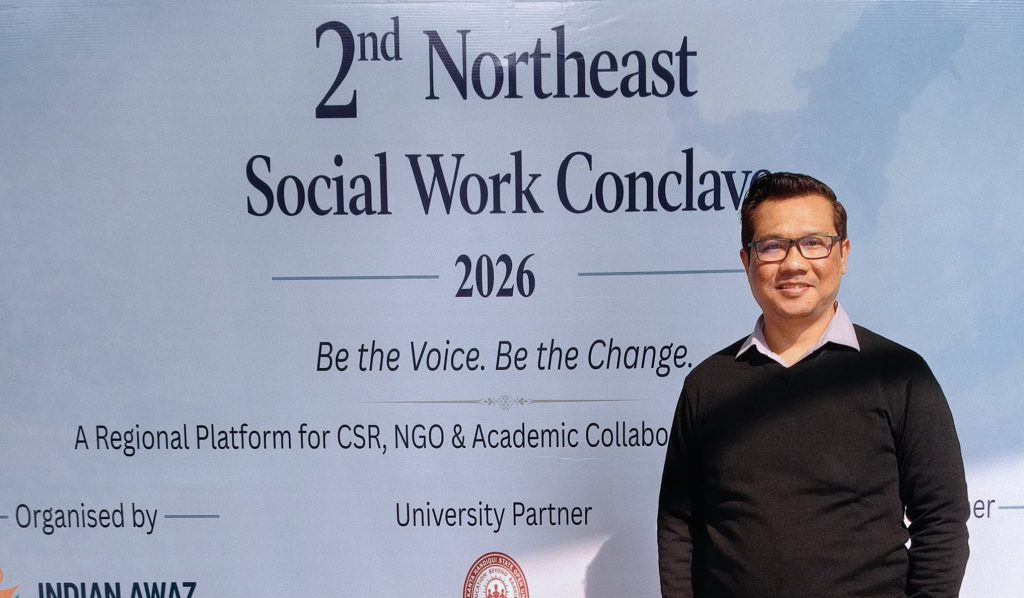
Rontu Sangma
Regional Facilitator, Pallium India
Arunachal Pradesh, Assam, Nagaland,
Meghalaya, Mizoram, Tripura,
Manipur, Sikkim & West Bengal