
“Restorative Garden” to Foster Emotional Well-being and Nurturing Hope
Harnessing horticultural therapy in the field of palliative care
The greatest gift of the garden is the restoration of the five senses.” – Hanna Rion
About five months ago, I received a call from one of my colleagues and a volunteer, who loves gardening. They shared a proposal from the Department of Community Science, College of Agriculture, Vellayani, introducing the concept of horticultural therapy in palliative care.
As an individual who finds solace and joy among plants, this message got me curious as well as excited. It felt like an invitation to cultivate not just soil, but also the minds of our inpatient beneficiaries and caregivers, hope and restoration.
Further discussions with Ms. Parvathy A.K., PG Diploma in Horticultural Therapy, Dept of Community Science, College of Agriculture, Vellayani gave me a better understanding of Horticultural therapy. It is both simple and powerful: horticultural therapy invites people into gentle contact with plants through activities such as planting, watering, nurturing, and watching life grow. Special designs may include easy pathways, raised beds, hanging planters, sensory plants, vertical gardens, and calming green spaces so that everyone, from wheelchair users to bedridden patients, can take part in the garden.
Synchronically, the research paper titled “Social and therapeutic horticulture as a palliative care intervention” (Pilgrem E. Social and therapeutic horticulture as a palliative care intervention. BMJ Support Palliat Care. 2023 Sep;13(3):323-326) provided valuable insights that complemented our exploration.
Nature heals quietly. Plants growing, blooming, and fading are reflections of life’s journey, helping patients and families to find meaning, peace, and acceptance. Being responsible for the care of a living plant reinstates a sense of purpose, dignity, and hope. A small but potent reminder that life has beauty remaining – the small joy of seeing a seed sprout.
Group sessions shift focus from ailment to shared endeavor, sparking collaboration, narratives, and bonds that combat isolation. Horticultural therapy shines in its profound adaptability, mirroring nature’s own resilience—raised beds and accessible planters invite wheelchair users and those bent by frailty to partake without strain, while container gardens wander to bedsides or indoors, defying seasons. Pulley-hung vertical realms bring verdant wonders to eye level for the mobility-limited, blending sight, touch, and whisper of leaves into accessible solace. Thus, tailored to each soul’s unique journey, it ensures healing flows unbroken, flexible as roots seeking light.
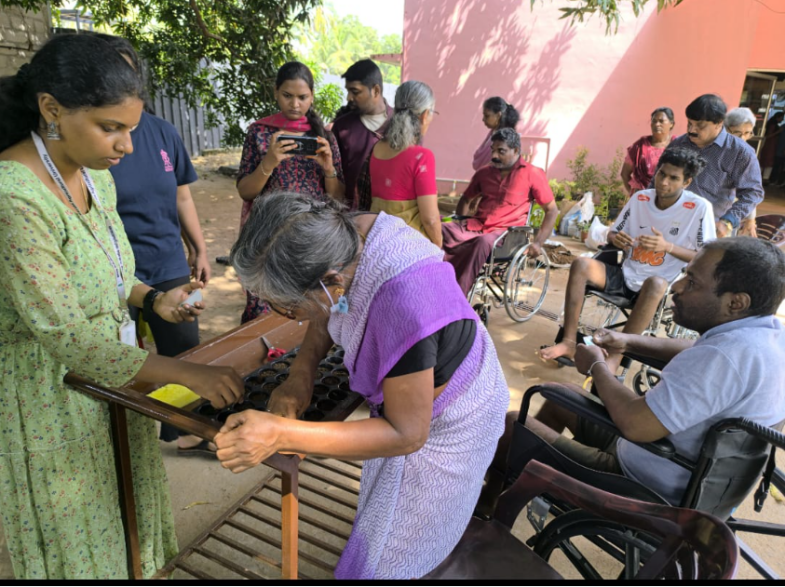
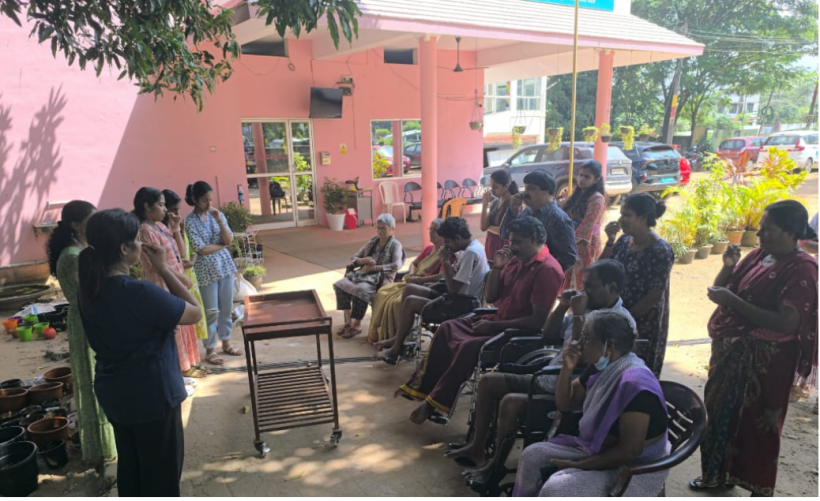
On 5th December 2025, Pallium India officially began its restorative garden activities. Patients, caregivers, staff, volunteers, and interns gathered under the morning sun. The session began with a calming mindfulness exercise, breathing in the fresh aroma of Indian borage leaves (Mexican mint, or ഞവര ഇല). Then came the most beautiful moment — patients and caregivers planting vegetable seeds and saying with bright smiles, “We will take care of them.” This unified effort brought together diverse stakeholders to realize the restorative garden vision, blending clinical expertise with academic horticultural insights for holistic patient benefits.
This is just the beginning. In the next part, we will share stories of patients and families rediscovering joy, one plant at a time.
Call for Action
Your support is invaluable. Please join us in cultivating hope through our restorative garden initiative and explore the scope of horticulture therapy in the field of palliative care.
Special thanks to our volunteers, Ms. Parvathy AK, PG Diploma student in Horticultural Therapy, Dept of Community Science, College of Agriculture, Vellayani and Mr. Aizaq P Davis, Social Officer, inpatient unit in-charge, Pallium India.

Anjali Krishnan. R
Manager, Department of Quality Assurance, Pallium India
Ms Anjali Krishnan R, is a Physical Therapist and Public health professional, with a strong passion for quality improvement projects and implementation research in the field of palliative care. She is currently working as Manager, Department of Quality Assurance in Pallium India, Trivandrum, Kerala. Anjali began her public health career at Pallium India in 2017, where she was introduced to palliative care. She is a firm believer in the transformative impact of integrating palliative care with special focus on person centeredness within the health system to enhance the well-being of individuals and their families.