The Living Dead Among Us
A Call to Recognise Social Death
Not all deaths occur at the end of life.
Some deaths happen even when a person is still breathing.
Some deaths happen even when the heart continues to beat.
Some deaths happen even when a person continues to walk among us.
These are the deaths we rarely acknowledge.
These are the people we fail to see.
These are the socially dead.
They live among us every day.
The elderly person who spends weeks without meaningful human contact.
The patient whose diagnosis slowly erases their identity.
The caregiver whose own life disappears beneath endless responsibilities.
The person with disability who is spoken about but rarely spoken to.
The person whose pain has become so ordinary that society no longer notices it.
They are alive.
Yet parts of them have already died.
Their social roles have disappeared.
Their sense of purpose has diminished.
Their identity has been overshadowed by illness, dependency, poverty, stigma, or abandonment.
Their voices have become silent—not because they have nothing to say, but because no one is listening.
In healthcare, we often focus on physical symptoms.
We measure pain.
We monitor vital signs.
We prescribe treatments.
These are essential responsibilities.
But there is another form of suffering that rarely appears on assessment forms.
The suffering of losing one’s place in the world.
The suffering of becoming invisible.
The suffering of being present but no longer recognised.
A person may survive cancer and still experience social death.
A person may survive a stroke and still lose their identity.
A person may receive excellent medical care and still die socially through loneliness, exclusion, and neglect.
This suffering cannot be treated by medication alone.
It requires something else.
It requires human connection.
It requires recognition. It requires presence.
One of the greatest tragedies of modern healthcare is that we often reduce people to labels.
A diagnosis.
A bed number.
A case.
A problem to be solved.
A file to be completed.
Yet behind every diagnosis is a story.
Behind every patient is a life.
Behind every caregiver is a struggle.
Behind every silent face is a voice waiting to be heard.
How many remarkable individuals have disappeared from society’s attention because illness changed their circumstances?
How many teachers, farmers, labourers, artists, parents, leaders, and dreamers have gradually become invisible?
How many prodigies have died carrying their wisdom, experiences, and stories to the grave because no one paused long enough to listen?
The world is losing extraordinary human potential every day—not only through physical death, but through social death.
This should concern all of us.
Not only social workers.
Not only palliative care professionals.
Not only healthcare workers.
All of us.
Because social death is ultimately a failure of human connection.
A society that allows people to become invisible has lost part of its humanity.
The solution is not complicated.
It begins with noticing.
Listening.
Acknowledging.
Valuing.
Being present.
Sometimes the most powerful intervention is not a treatment plan.
It is helping a person reclaim their identity.
It is reminding them that they are more than their illness.
It is helping them reconnect with their strengths, relationships, purpose, and dignity.
As professionals, we must ask ourselves difficult questions.
Are we truly seeing the people we serve?
Or are we merely seeing their problems?
Are we restoring dignity?
Or simply managing symptoms?
Are we empowering people? Or unintentionally allowing their identities to disappear beneath their diagnoses?
The future of healthcare and social care must be about more than extending life.
It must be about restoring humanity.
Because what people fear is not always death itself.
Sometimes they fear becoming forgotten before they die.
To every professional reading this:
Wake up.
Look around you.
Listen more carefully.
The socially dead are living among us.
They are waiting to be seen.
Waiting to be heard.
Waiting to be remembered.
You may not be able to change the entire world.
But you may be able to change someone’s world.
You may be the person who helps them reclaim their voice.
Their dignity.
Their purpose.
Their identity.
Let us become professionals who do more than treat problems.
Let us become people who restore humanity.
Let us build communities where no person becomes invisible.
Let us work towards a future where avoidable suffering is reduced, dignity is protected, and human connection remains at the heart of care.
Because no one should have to die socially before they die physically.
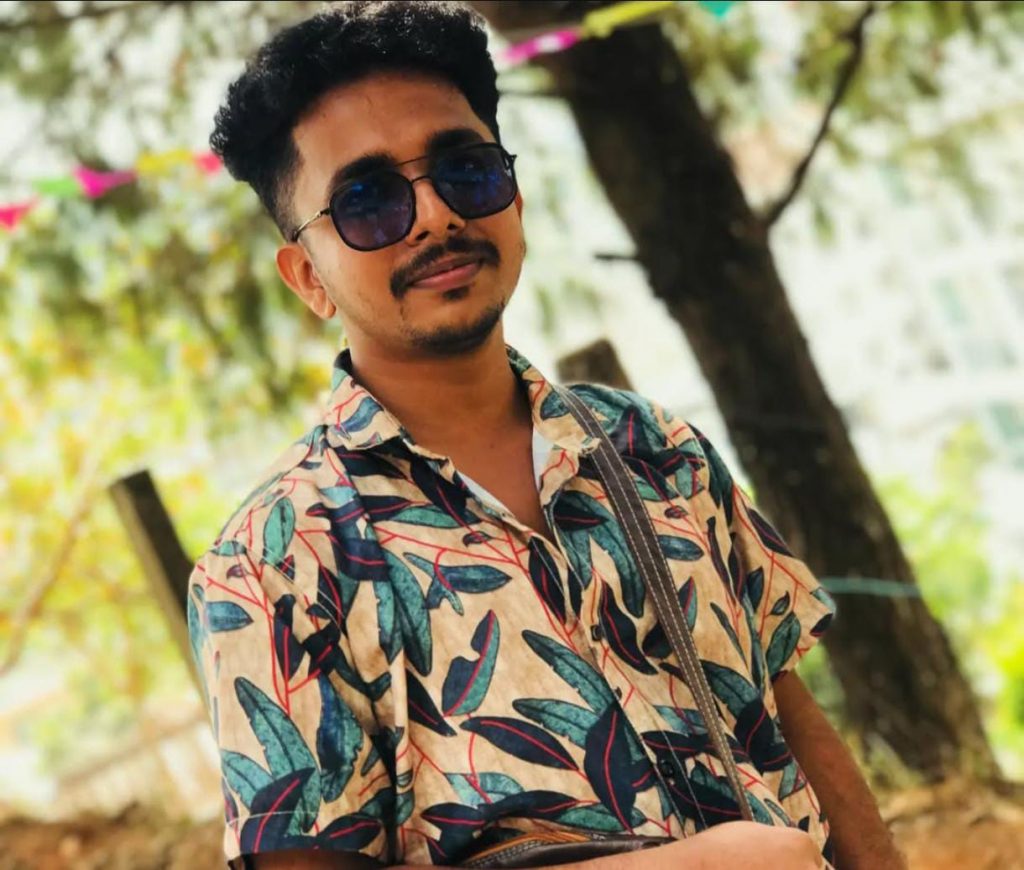
Aizaq P Davis
Medical & Psychiatric Social Worker
Volunteer, Pallium India
The reflections presented in this article were inspired by a personal discussion with David Oliviere regarding the concept of social death and its application to palliative care. (D. Oliviere, personal communication, June 2026).