
Co-Building Hope and Harmony
Pulling Together, Even When It’s Hard
There is a kind of silence I have come to recognise in palliative care. Not the peaceful kind people often imagine, but a dense, heavy silence. The kind that sits between a beneficiary and their family when no one knows what to say next. The kind that follows a difficult conversation. The kind that holds fear, anger, denial, and sometimes a quiet acceptance.
I first encountered that silence at the Baptist Christian Hospital in Tezpur, Assam. I was still trying to understand what it meant to be a social worker in a palliative care setting. I thought I had to do something all the time, offer solutions, say the right things, make sense of what was happening. But the work quickly taught me otherwise.
I remember sitting with a young girl in end-of-life care during a home care visit. There was so much distress in that room, hers, her sister’s, her mother’s, ours. She was disoriented at times, on oral morphine, slipping in and out of reality, asking questions that none of us could answer. Why me? Why now? There was anger, there was fear, there was a kind of helplessness that felt almost physical.
We didn’t fix anything that day. We stayed. We listened. We tried to understand what she was feeling, what her mother was carrying. And in that moment, I realised that sometimes, care is not about resolving distress. It is about not abandoning someone in it.
I didn’t have the language for it then, but looking back, that was my first real lesson in what it means to “pull together.”
Now, working with Pallium India as a Community Social Officer, that idea has taken on a different shape. My work is no longer limited to a ward or to home care. It moves through homes, communities, and systems that don’t always speak to each other. I find myself working not just with beneficiaries and families, but with neighbourhoods, volunteers, and local networks, trying to build something that can hold care beyond the presence of professionals.
Community-owned palliative care sounds beautiful when we say it. And it is. But it is also slow, messy, and sometimes frustrating. Because people are already carrying so much.
Caregivers are exhausted in ways that are rarely acknowledged. I have seen family members, often women, quietly take on the entire burden of care, negotiating medications, finances, emotional breakdowns, and their own fatigue all at once. Communities, while capable of deep compassion, are also shaped by stigma. Illness, especially when it is prolonged or terminal, can isolate people in ways that are hard to explain.
And then there are the systems, fragmented, inconsistent, sometimes inaccessible. People fall through the cracks more often than we would like to admit.
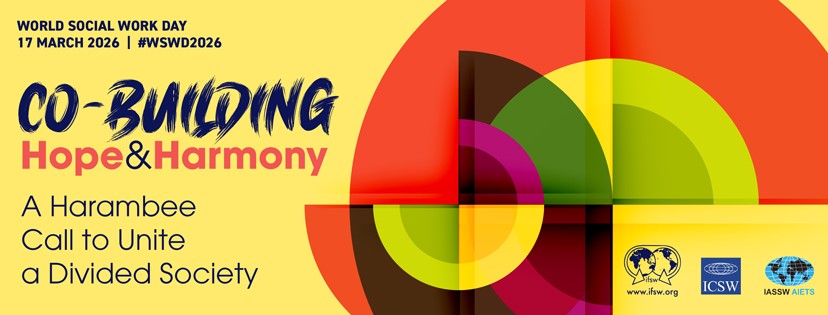
So, when we talk about this year’s World Social Work Day theme, “Co-Building Hope and Harmony: A Harambee Call to Unite a Divided Society,” I can’t think of it as an abstract idea. I see it in very real, very imperfect ways.
I see it in a neighbour who starts by helping once in a while, and slowly becomes someone the family depends on. I see it in a volunteer who shows up, not because they have to, but because they choose to. I see it in families that do not always get along, but still find a way to sit together when it matters. I see it in team discussions that are not always smooth, but remain centred on the person we are caring for.
This is what “pulling together” looks like in practice. It is not seamless. It is not always harmonious. But it is intentional.
At the same time, this idea of togetherness cannot ignore the inequalities that exist within it. Who gets to step back, and who does not have that option? Who is heard when decisions are made? Who has access to care, and who is still waiting for it?
These are questions that keep coming up in my work, especially in advocacy. Because building hope is not just about bringing people together. It is about making sure that the coming together is just, inclusive, and sustainable.
In community spaces, I am learning to step back more. To not always lead, but to facilitate. To create space for people to take ownership, even if it takes time, even if it does not look perfect.
There are days when it feels like nothing is moving. Meetings get postponed. Plans do not fully come together. People are unavailable, or understandably disengaged. And then, something shifts.
A caregiver says they feel less alone. A community member offers to take responsibility for something small, but important. A beneficiary feels heard, maybe for the first time in a while.
These moments are easy to miss if we are only looking for big outcomes. But they are where the work actually lives.
I have also been thinking about the word Harambee. Its origins are not entirely clear. It is widely understood to be genuinely Bantu, and some accounts trace it back to Swahili porters who would call out to each other while lifting heavy loads, halambee, a rhythmic way of saying, “let’s do this together.” There is something very grounded about that image, people carrying weight, quite literally, in coordination, in effort, in shared strain.
There are also other stories, less certain, more like echoes. One of them suggests that Indian labourers building the Uganda Railway would invoke Hare and Ambe, calling upon divine strength as they worked, and that this may have shaped the word over time.
Whether or not that is historically precise, I find myself drawn not to the accuracy of it, but to what it represents. People from different places, carrying weight together. Calling out to each other, and sometimes to something larger than themselves, just to get through the task at hand.
That feels very close to what I see in palliative care.
As this work is, in many ways, about carrying. Carrying pain that cannot be taken away. Carrying stories that stay with you long after the interaction ends. Carrying systems that do not always function the way they should. Carrying each other, when possible.
And some days, I am also aware of my own body in that process. Living with a condition that does not always cooperate, I have had to learn what it means to keep showing up while negotiating pain, fatigue, and limitation. It has changed the way I understand care, not as something I only offer, but as something I am also, in different ways, in need of.
It has made me more attentive to what people do not say. More patient with pauses. More aware that strength does not always look like endurance, but sometimes like asking for help, or simply continuing despite discomfort.
And it reminds me, often, that none of us is outside the experience of vulnerability.
And no one can carry all of it alone.
Palliative care has changed how I understand hope. It is no longer something distant or ideal. It is something I see in fragments.
Hope is a caregiver finding the strength to continue, one more day. Hope is a community slowly beginning to take responsibility for its most vulnerable members. Hope is a beneficiary who, even in discomfort, feels seen and not abandoned.
Harmony, too, is not perfect alignment. It is people choosing to stay connected, even when things are difficult.
I am still learning how to do this work. Still learning when to step in and when to step back. Still learning how to hold space without trying to control it. Still learning that sometimes, being present is enough.
If Harambee is a call, I do not think it is asking us to have everything figured out.
I think it is asking us to stay. To not walk away from the difficult conversations. To not give up on the slow work of building trust. To not assume that someone else will take responsibility.
To keep showing up for beneficiaries, for families, for communities, and for each other.
In the end, this work has never been about what we can do alone. It is, and has always been, about what becomes possible when we choose to pull together.
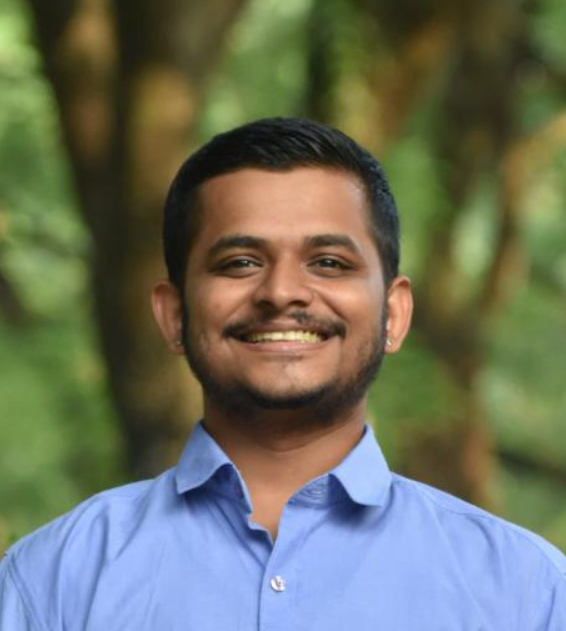
Gokul K. Gopikrishna
Community Social Officer, Pallium India