
The Teachers We Meet Along the Way
Every September, as the nation turns its attention to classrooms, textbooks, and academic mentors for Teachers’ Day, we in palliative care find ourselves reflecting on a very different kind of syllabus. Our most profound lessons are not found in medical journals or lecture halls. They are taught in quiet hospital rooms, on home visits, and in community gatherings across the country.
In palliative care, every encounter is a classroom, and every person a lesson. This Teachers’ Day, we honour the extraordinary educators who shape our practice, our empathy, and our understanding of what it truly means to heal.
1. Patients: The story, the context, the person.
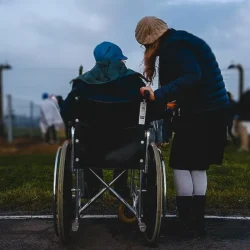
A patient living with a serious illness teaches us to look far beyond a clinical diagnosis. They remind us that behind every medical chart lies a rich tapestry of fears, unfinished dreams, quiet hopes, and small joys. Whether through a gentle smile in the face of suffering, a profound question, or even shared silence, patients guide our clinical focus away from “What disease do you have?” and firmly toward “What matters to you?”

2. Caregivers: there are no bystanders.
Behind every patient stands a caregiver quietly bearing the weight of medicines, finances, appointments, and exhaustion. From these unsung heroes, we learn that care is an active, daily discipline. They teach us that we are never treating an isolated individual, we are caring for an entire family unit that needs to be heard, supported, and nurtured just as deeply.
3. Communities: everything is interdependent and interwoven.
Palliative care cannot live within the walls of an institution. Our local communities, neighbours, and grass-root organizations show us that compassion is a shared collective duty. They teach us that care belongs everywhere and that an entire village can come together to ensure no one faces illness in isolation.
4. Clinical teams: the importance of turning knowledge into human connection
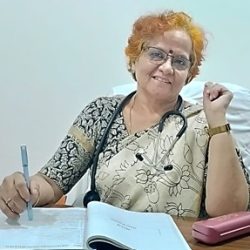
While clinical expertise is essential for symptom and pain management, our palliative care teams teach us that medical science must always serve the person. They demonstrate how to navigate uncertainty, how to offer honest communication, and how to preserve a patient’s agency and dignity when cure is no longer an option.
Stationed at the heart of patient care, nurses, social workers and counsellors notice the quietest details – a restless night, a subtle shift in expression, or a caregiver’s silent panic. They teach us that true healing often resides in the smallest acts: adjusting a blanket, holding a hand, or offering an unhurried, listening ear through difficult hours.
5. Volunteers: show up and be present.
Without needing medical degrees, volunteers teach us the extraordinary impact of simply showing up. Through their gift of time, companionship, and everyday assistance, they demonstrate that meaningful change doesn’t require complex interventions – it starts with an open heart and a willingness to be present.
A Two-Way Education
At Pallium India, training healthcare professionals and community members is central to our mission. Yet, every training session reinforces a simple truth: the learning always goes both ways. While we share clinical tools, our learners, patients, and families continually teach us about courage, vulnerability, and humanity.
This Teachers’ Day, let us broaden our definition of who a teacher is. Let us honour those who teach us not from a podium, but through their lived experiences, their resilience, and their choices.
In the end, all these remarkable teachers leave us with a single, guiding truth: Care begins when we are willing to listen, and learning begins when we are willing to be taught.
– Editorial Team, Pallium India