
The Ache of Watching Someone Slowly Fade Away
No one prepares you for the grief of gradual disappearance.
For loving someone who is still here, and yet, in ways both visible and invisible, is already beginning to leave.
For watching familiarity fade while your love remains exactly where it has always been. People who visit after a month or even weeks often say, “He was alright the last time I saw him. How did things change so quickly?”
But the truth is, they didn’t change quickly.
We watched every inch of the journey.
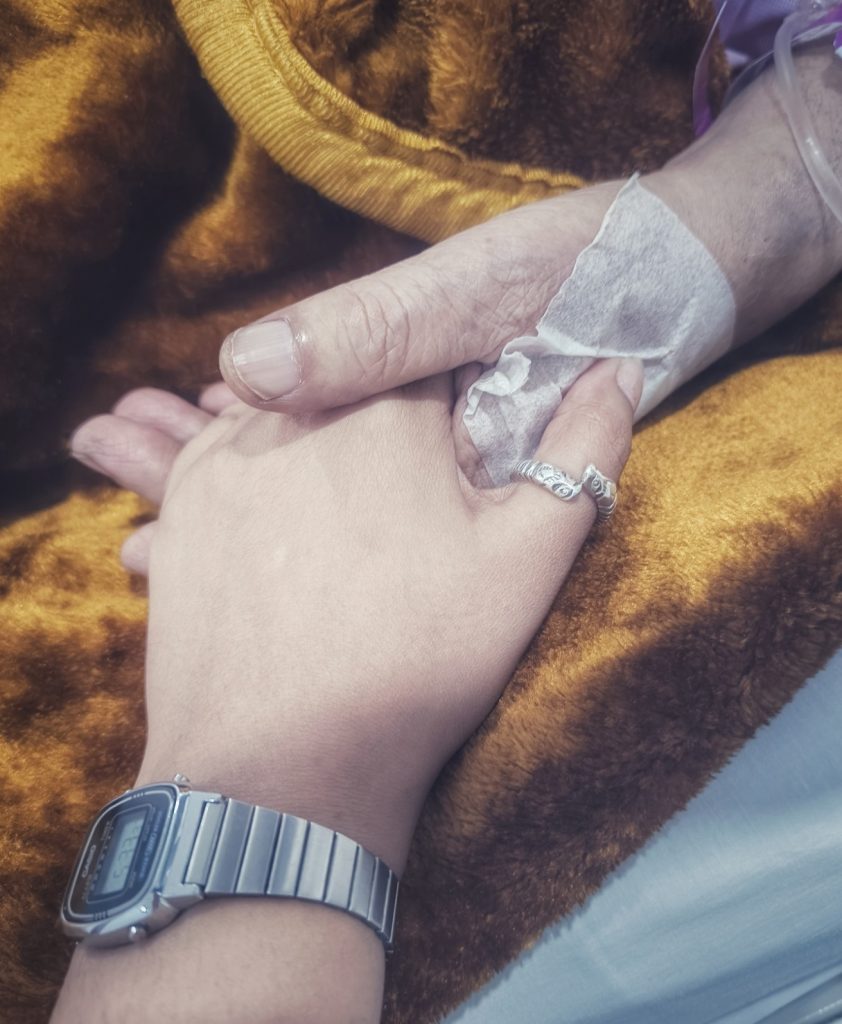
A fortnight ago, Papa was still talking. He recognised us. There were conversations, however brief. Familiarity still lived in his eyes. Today, he mostly remains unconscious. He sits up to eat with his eyes closed. He rarely speaks. Recognition has faded into moments of uncertainty, and words have become monosyllables uttered only when we gently ask if he is in pain.
And somewhere in these fifteen days, a realization settled in my heart: There is something uniquely gut-wrenching about losing someone little by little.
A sudden loss is devastating in ways I cannot pretend to understand. But a gradual departure carries its own quiet brutality. It asks you to witness a thousand tiny goodbyes instead of one.
You grieve a conversation before you realize it was your last real one.
You miss a smile while the person is still sitting in front of you.
You long for recognition from someone whose hand you are still holding.
Every day, a small part disappears, and every day, you must continue with the practical work of loving them, medicines, meals, changing positions in bed, checking if they are comfortable, asking questions that may never receive complete answers.
Life demands action while the heart begs for stillness.
Perhaps that is what makes this form of grief so agonizing: there is no designated moment to mourn. No clear line separating before and after.
The person is here, yet not entirely here. The body remains, but the familiar ways in which they occupied the world begin to retreat, one layer at a time.
And because the loss is gradual, the grief becomes gradual too..so gradual that you scarcely allow yourself to feel it.
There is always something urgent to do. Another medicine to administer. Another restless night to get through. Another meal to help with. Another morning to face.
Only occasionally, usually in the quiet hours, does the enormity of it all arrive.
You realize that you are not simply preparing to lose someone someday.
You are already losing them.
Every single day.
And perhaps the deepest sorrow of all is that love remains completely intact. It does not lessen to match what is being taken away. If anything, it grows fiercer, more protective, more tender. It continues reaching toward a person who can no longer always reach back in the ways they once did.
Yet we sit beside them.
We hold their hands.
We call them by the names we have always used.
We tell them they are loved, even when recognition no longer shines in their eyes.
Because somewhere beyond memory, beyond language, beyond consciousness itself, love still knows the way home.
And so, we stay.
Not because it is easy, but because this, too, is what loving someone means: having the courage to accompany them through every small goodbye, until the final one arrives.
Riddhi Tomar is an aspiring writer and family caregiver whose experience caring for her father during his journey with advanced cancer inspired her to write about palliative care, caregiving, and dignity at the end of life. Through her writing, she hopes to foster greater awareness and compassion for patients and their families.
Originally published: The ache of watching someone slowly fade away – CopyThatRiddhi