
Palliative Medicine
Trivandrum Institute of Palliative Sciences (TIPS) PALLIUM INDIA
Six weeks’ “hands-on” Certificate Course in Pain and Palliative Medicine (CCPPM)
Objective:
To enable participants to gain practical “hands-on” training in palliative care delivery supplemented by theoretical background.
Course schedule:
The course will start on the first Monday of alternate months (January, March, May, July, September and November), and will go on for six weeks, followed by an examination at the end of the course period.
Faculty-in-charge:
- Medical: Dr M.R.Rajagopal
- Nursing: Ms Raelee Jensen
Eligibility:
M.B.B.S, permanent registration with medical council.
Download Application Form (.doc)
Venue:
The course will be held in the institutions and palliative care services attached to Trivandrum Institute of Palliative Sciences (TIPS) including outpatient clinic and home and hospice visits.
Working Hours:
All six weeks will be 6-day weeks. Work starts at 9.00 AM and finishes at 5.30 PM or till clinical work is completed, whichever is later.
If for some reason leave of absence is needed for more than two days for unforeseeable reasons, the duration of the course will be extended by the number of days missed.
The learning process:
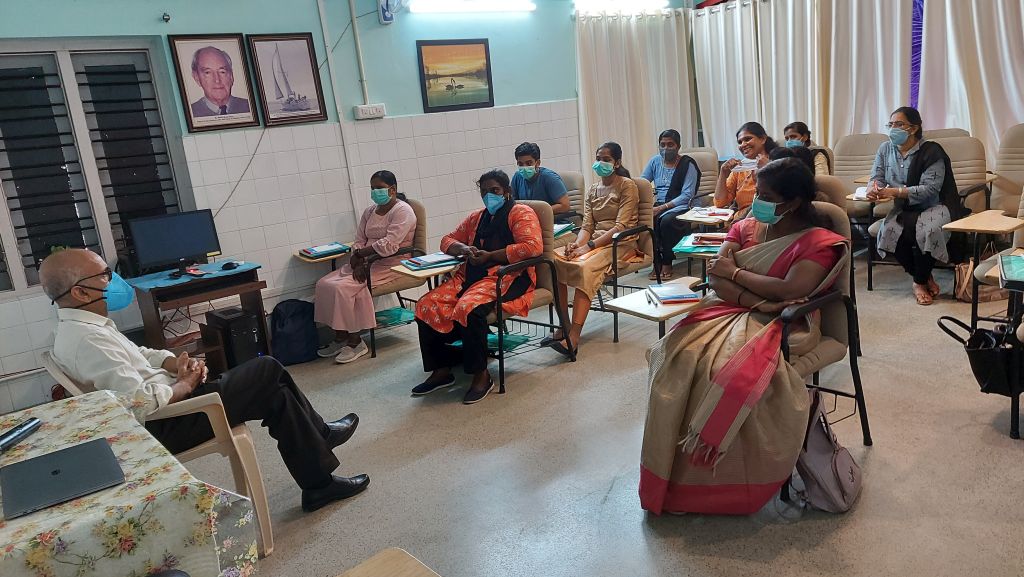
The bulk of the learning process will be by the bedside, in the outpatient department, in the wards, and at patients’ homes. In addition to home visits, the participant will also attend some peripheral palliative care clinics in some outlying towns.
There will be one or two academic exercises every day – majority of the subjects will be covered in the form of interactive tutorials. Periodically the participant will be expected to make short presentations on some of the subjects as well as to present interesting reports of patients and problems.
All of palliative care cannot be covered in academic programs. The participant is encouraged to explore problems arising during clinical work and initiate academic discussions. We will provide enough flexibility with the academic program to encourage this.
At the beginning of the course, the participant will be given a copy of the book “Introducing palliative care” 4th ed (Robert Twycross). In addition there will be access to a departmental library and to PubMed and some other academic sites.
Log book:
The participant is required to keep a log book of at least five reports – studies of patients – to include initial evaluation, treatment plan and progress over the period studied.
Assignments:
The participant will be given at least one assignment per week. The participant is encouraged to use the library as well as internet to assist the process of doing the assignment. We expect that those who are not familiar with literature search using the internet will learn to do it during this course.
SUBJECTS COVERED BY THE ACADEMIC PROGRAM
WEEK I
Introduction to Palliative care:
- What is palliative care? The WHO definition – old and new – its limitations – the terms hospice care, end-of-life care, supportive care – terminal care – the relevance of these terms in relation to the concept.
- Spectrum of diseases needing palliative care in the Indian context.
- Concepts of “Disease” Vs “Illness” in medical practice – concept of total care and its components.
- Ethics of care: the principles of autonomy; beneficence and non-maleficence; and social justice; their relevance to general medical practice and particularly to palliative care.
Principles of symptom control:
- Need for symptom control; avoiding harm from controlling symptoms; the need for symptom control in curable and incurable diseases.
- The double effect.
Introduction to Pain:
- What is pain? The IASP definition and the relevance of the emotional component.
Pathophysiology of pain:
- Neurophysiology of pain.
- Peripheral sensitization and recruitment; relevance to treatment.
- Central sensitization and recruitment; relevance to treatment.
- Permanent changes in the nervous system in sustained pain.
Classification of pain:
- Nociceptive and neuropathic pain
- Other classifications of clinical relevance
Pain assessment:
- Principles of assessment
- Tools of assessment
- Pain as the fifth vital sign
Fundamentals of pain management:
- General principles of pain management
- WHO analgesic ladder: the concept.
Introduction to Communication with the patient: the need; the problems.
WEEK II
Communication (aided by role plays):
- Emotional reactions to illness and treatment
- “Don’t”s
- “Do”s
- Handling denial, anger, crying
Management of Pain: Non-opioids
- Paracetamol
- NSAIDs: COX – 2 selective and non-selective drugs – adverse effects – choice of drugs – current status.
Introduction to opioid pharmacology:
- What are opioids?
- How and where do they act?
- Enumeration of opioids currently available in India and their place in the analgesic ladder.
- “Ceiling” effect and its relevance.
- Opioid responsiveness of pains
- Weak opioids available in India for oral use
- dextropropoxyphene with particular reference to its cumulation – current status of the drug in view of UK’s decision to withdraw the drug
- codeine – its cost and current status
- pentazocine and its inadvisability
- tramadol with its pharmacological difference from the other opioids – its cost factor.
- Buprenorphine:
- Oral morphine
- Its position in the Indian analgesic ladder
- Pharmacodynamics
- Pharmacokinetics
- Use of oral morphine; titration of dose
- Adverse effects
- Constipation
- Nausea & vomiting
- Drowsiness & tiredness
- Urinary hesitancy
- Pruritus
- Toxic effects and their management:
- Undue drowsiness
- Myoclonus
- Delirium
- Why is respiratory depression not a problem with oral morphine?
- Opioids for pain treatment and drug dependence and tolerance
- Physical dependence
- Psychological dependence
- Pain & chemical dependence interphase
- Opioid use in pain in the drug-dependent
- Management of pain emergency: the iv morphine trial
Opioid availability:
- The international scene – role of INCB – role of government in control
- Regulatory barriers to opioid availability for pain management
- The narcotic regulations of India and the recent amendment
- Procurement of morphine
- Maintaining stock and documentation of dispensing oral morphine
WEEK III
Adjuvant analgesics:
- Definition and types
- Adjuvants in neuropathic pain
Nausea and vomiting
Constipation
Intestinal obstruction
Breathlessness
Cachexia, anorexia
Skin care, wound care
Lymph edema
Itching
WEEK IV
Palliative care in diseases other than cancer
- HIV/AIDS
- Peripheral vascular disease and other chronic pain states
- Neurological diseases
- Cardiorespiratory diseases
- Chronic renal failure
The concept of a “good death and the last few days
Double effect of palliative medication
Difficult pain
- Factors contributing to non-responsiveness to opioids
- Sequence of action in difficult pai
Pain relief beyond the WHO ladder
Invasive procedures
Advocacy
- Direct and indirect advocacy
- Media advocacy
- Working with Governments
- Collaboration with other NGOs
WEEK V
Stoma care
Radiotherapy in palliative care
Chemotherapy in palliative care
Anxiety and depression
Ethical issues in palliative care
Spirituality and care
“Other symptoms” based on patients’ problems seen during the course
WEEK VI
Organizing a palliative care service
Management of change; teamwork
Teaching methodology
- Learning styles; different ways of facilitating learning
- Making lectures effective
- Interactive learning methods with emphasis on group discussions and role plays
- Proper use of visual media
Review of Course and Feedback
Evaluation :
1. Evaluation of light assignments, case presentations and topic presentations which together carry 60% of the total marks.
2. The final examination will take place on the last day of the course. It carries 40% of the total marks.
3. The trainee is awarded the certificate if she or he secures 50% marks. Reflective journal is required, but not graded.
4. Evaluation of the course by the candidate. The students will be requested to give their feedback on the teaching program at the conclusion of the course. The feedback will be used for modification of the program to enhance its usefulness.
Course fees:
The course fee will be US$500. (Candidates from within India can apply for a subsidized course fee of Rs. 5000 /-). The fee is to be paid in cash or by demand draft payable to “Pallium India” at Trivandrum on acceptance to the course.
The course coordinator can assist in finding accommodation in Trivandrum. Low cost accommodation can be arranged for those who need it. Please communicate with the course coordinator regarding your requirements.
Follow up refresher course:
Those who have undergone the certificate course will be offered a refresher course twice a year. Trainees are encouraged to keep a record of difficult clinical and administrative issues which can be discussed at such refresher courses.
For any assistance, please contact:
The course co-ordinator,
Trivandrum Institute of Palliative Sciences (TIPS)
TC XXI / 778CR, 2nd floor,
Old S.U.T Mother & Baby Hospital,
Trivandrum 695004, Kerala, India.
Email: info@palliumindia.org
Phone : +91 938 860 5681


